TNQ Drought Hub
James Cook University Australia
Search

Newsletter #36: April

TNQ Drought Hub

From the Director

What does community and regional resilience look like?

Locally led. Engaged. Inclusive. Connected. Adaptive. Transformational.

This was what we all experienced at the second Western Cape Futures Symposium in Weipa last week. The TNQ Drought Hub was proud to support and contribute to this successful event. The symposium is locally driven, based on a collective desire to secure a prosperous and vibrant future for the Western Cape. There were inspiring examples of local businesses and local leaders, of quiet achievers and connected communities. Equally inspiring were the number of private businesses, international companies, government agencies, philanthropic organisations and politicians all wanting to collaborate and back the local visions for the future.

These are the same qualities we’ve seen across north and central–west Queensland, through drought, devastating floods, and mining transformation. Over many decades, outback Queensland has grown into a key tourism destination, leveraging its place-based advantages such as wide-open spaces, fresh air, crisp night skies and dinosaur fossils. This diversified economic base has helped buffer the effects of drought and market volatility, and it’s not only the economic diversity that builds resilience, but also the social diversity and collaboration which is such an important ingredient for resilience.

TNQ Drought Hub Director David Phelps

Place-based advantages discussed at Weipa ranged from the fishing industry to cultural tourism potential, the advantage of a deep-sea port, and the opportunity that being so close to the equator offers as a location to launch large space-bound rockets. These are all opportunities for the Western Cape to diversify its economic base, and hence build resilience.

Whilst communities and regions across north Queensland are at different stages of their journeys towards a better future, they are all resilient. Every community has their local champions, who are passionate and proactive advocates for a better future They lead with vision, through collaboration and consultation, and inspire outside support by demonstrating that their people, their place, community and region is worth investing in.

I wanted to take a moment to celebrate the local leaders who inspire support, the quiet achievers who just like to ‘get on with it’, and the communities that they contribute to. Let’s all take a moment to consider how we will back them in to achieve their local visions, and to help them build on their already amazing resilience.

For the TNQ Drought Hub, we will be doing this through a range activities that help build resilience into the future, based on Social & Cultural, Economic and Environmental pillars. We will continue to collaborate with our community, build meaningful relationships across the region and identify gaps that we can support within the agricultural industry.

Until next time, keep safe and well.

David Phelps
Director

Hub Highlight - Burdekin Irrigation Toolkit Expands to Far North Queensland after successful trial

Key takeaways

  • An innovative toolkit aims to improve water and energy efficiency in sugar cane production, reduce labour costs and create a more sustainable farming practice
  • The toolkit could redefine water management practices across multiple crop types, contributing to long-term drought resilience and productivity growth for agricultural communities
  • The TNQ Drought Hub is scaling up the successful Burdekin Irrigation Project (BIP) trial into the Atherton Tablelands to highlight the importance of data-driven irrigation practices in the face of increasing climate variability.

TNQ Drought Hub Director, Professor David Phelps, said the hub is building on the success of this previous trial through the Dimbulah site to highlight the importance of data-driven irrigation practices in the face of increasing climate variability.

“One of the things we’re really trying to achieve at the TNQ Drought Hub is to help producers adopt new practices to become more resilient through better profitability, better productivity, and more sustainable systems,” Professor Phelps said.

“In this situation, we’re trying to take technologies that have worked really well in the Burdekin sugarcane production area, up to the Atherton Tablelands, and iron out the local issues.”

Steve Attard, Irrigation Agronomist and Managing Director at AgriTech Solutions, is supervising the technological implementation in Dimbulah. Steve said many farmers lack precise insights into their water usage, cost and whether it meets their crops’ specific needs.

Drought Resilience in Action

Central Queensland producers build resilience through resilient pastures

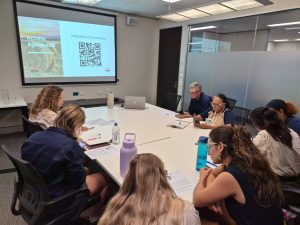
Hub Node, Fitzroy Basin Association in partnership with the hub recently held two Resilient Grazing Field Days in Springsure and Wowan on the 1st and 3rd April. The field days offered hands-on opportunities for Central Queensland graziers to learn how to make important production decisions to improve business resilience.

Attendees learnt about creating resilient pastures through the use of legumes, how to take a pasture cut, calculate dry matter, understand the importance of a feed budget and has a land condition assessment session.

Image: Regional Soils Coordinator Dhiraj Gajera presenting at the workshop

Cane toads take centre stage at ‘Eat the Invaders’ Screening

Cane toads were the invader of choice at the screening of ABC’s “Eat the Invaders” in Cairns on the 2nd April.

After the screening, a panel of experts moderated by ABC’s Adam Stephen discussed the ‘tasty’ opportunities associated with unwanted pest. Panel members included an ecologist, invasive species expert, and an ethnobotanist as well as other field experts who deliberated how else cane toads can be used.

The screening was presented by the North Australian Indigenous Land and Sea Management Alliance, in partnership with the TNQ Drought Hub, and the Australian Broadcasting Corporation.

Image: Eat the Invaders screening panel members, courtesy NAILSMA

Image: Eat the Invaders screening panel members, courtesy NAILSMA

AgInspiration tour cultivating curiosity in Cooktown's next generation

Over three action-packed days, 27 students from Cooktown State School set out on an unforgettable journey into the heart of Far North Queensland agriculture as part of the 2025 Cooktown Ag Inspirations.

With support from TNQ Drought Hub and Cape York Natural Resource Management and delivered by the AgForce School to Industry Partnership Program, this initiative continues to spark curiosity, build understanding, and inspire the next generation of agricultural leaders.

Ag Inspirations is more than a school excursion, it’s an investment in the future of agriculture. By connecting students with local ag enterprises, the program shows how diverse, innovative, and rewarding careers in agriculture can be. It’s a chance to build awareness, spark ambition, and cultivate the skills needed to ensure the long-term sustainability of the sector.

Image: Cooktown State School students

Food Futures Conference showcases Northern Australia agricultural innovation and sustainability

The two-day Northern Australia Food Futures Conference, which focuses on innovative agribusiness in Northern Australia, provided a wealth of insights into how the region is shaping the future of agriculture through sustainability, technological advances, and strategic collaborations.

The TNQ Drought Hub was invited to attend and present alongside neighbouring hub, the Northern Hub.

Our team made the most of the 2025 theme, ‘Innovative Agribusiness in Northern Australia: Nurturing Natural Assets for Future Growth’ by connecting with industry, researchers and community to learn about new and creative approaches to agriculture.

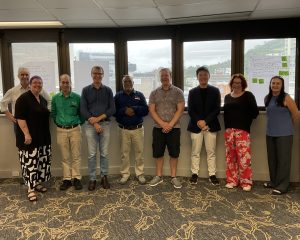
Image:  TNQ Drought Hub team representatives at the Food Futures Conference 

Coming Soon: 2025 Scholarship Recipient Announcement 

Stay tuned in the coming weeks as we announce of our latest round of honours scholarship recipients.

These projects will play an important role in exploring opportunities and addressing the challenges that matter to our region’s agricultural businesses, communities, and ecosystems.

In the meantime, you can read about our previous students research which includes topics like bare ground restoration, mental health services and professionals and empowering bush food enterprises.

Image: Students out in the field collecting data for their research 

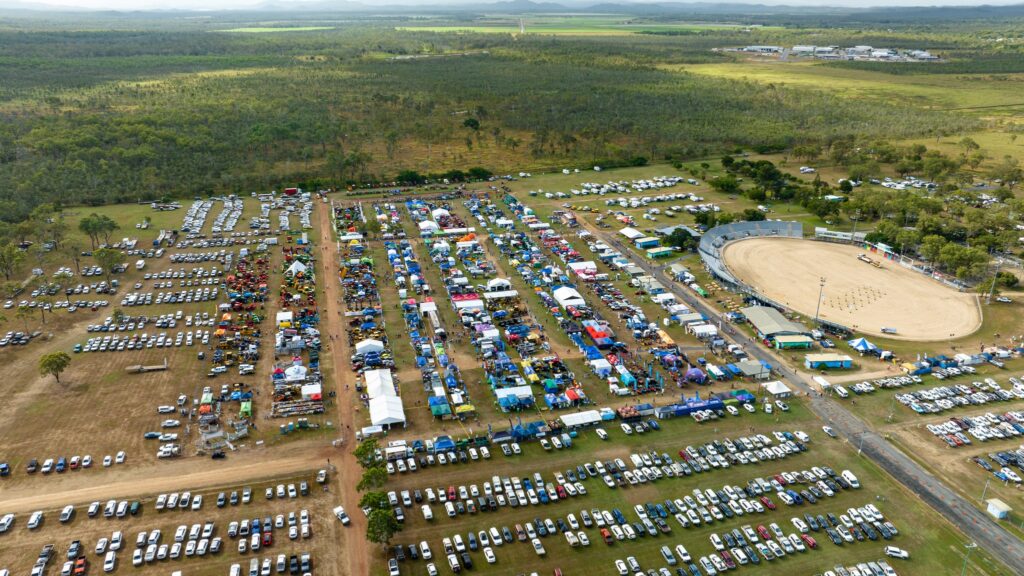
Join us at the Rotary FNQ Field Days, 28-30 May, Mareeba

We are pleased to be joining Gulf Savannah and Cape York NRM’s at the Rotary FNQ Field Days from the 28-30 May in Mareeba.

The event is one of North Queensland’s premier agricultural field days and showcases the latest in agribusiness and agtech.

You’ll find Knowledge Broker, Karen George presenting on the latest hub activities with a special presentation on enhanced rock weathering and Kara-Glenn Worth, our Digital Ag Innovation Consultant will be speaking at the Technology, Robotics & Automation segmentation on AgValuate and adoption pathways.

Image: 2024 FNQ Field Days

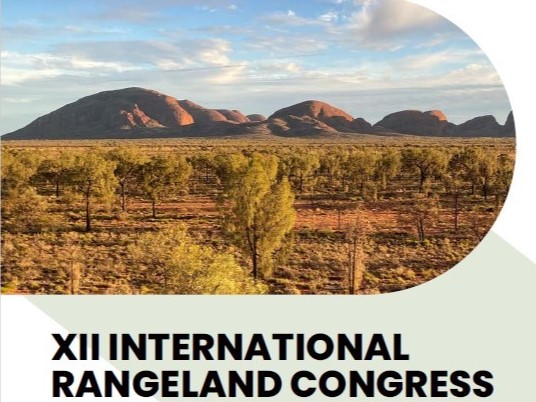
Working Together for Our Global Rangelands Future: XII International Rangelands Congress, 2-6 June, Adelaide

The XII International Rangeland Congress (IRC 2025) is scheduled to take place from 2–6 June, 2025, at the Adelaide Convention Centre in South Australia. This significant global event aims to foster collaboration and knowledge exchange among rangeland professionals worldwide.

The central theme of IRC 2025 is “Working Together for Our Global Rangelands Future”, emphasising the importance of collective action and shared knowledge in addressing the challenges and opportunities facing rangelands globally.

This Congress presents a unique opportunity for researchers, practitioners, policymakers, and community members to come together to discuss and shape the future of global rangelands.

Image: XII International Rangelands Congress 2025

REGISTER NOW: Governance Essentials, Online, starting 4 June

Join the TNQ Drought Hub and Get on Board Australia for an engaging and practical online Governance Essentials course.

Perfect for individuals working with or wanting to be involved with community groups, this course dives into the principles of governance, your duties and responsibilities, ethical decision-making, and the skills to lead with confidence.

Date: Wednesday 4 June – Wednesday 13 August
Duration: 6 sessions over 10 weeks
Time: 12:15pm – 1:00pm (AEST)
Where: Online (blended self-paced learning with short recap sessions)
Cost: $150 (valued at $250, subsidised by the TNQ Drought Hub)

Register now.

Get Involved

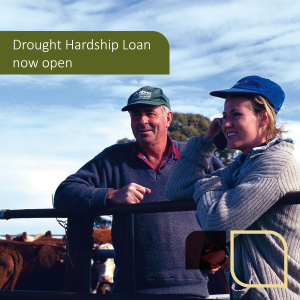
  • Apply: Financial assistance for primary producers. Financial recovery assistance is now available for primary producers impacted by high rainfall and flooding in Queensland. Assistance includes: Disaster Assistance Loans up to $250,000, Essential Working Capital Loans up to $100,000, Freight subsidies of up to $5,000. Find out more.
  • Survey: Queensland DPI Agriculture Disaster Impact Survey. Primary producers affected by high rainfall and flooding in northern Queensland can report damage or losses via the Disaster Impact Survey.  Reports help determine if additional assistance is needed to support our industries’ recovery needs. Complete the survey.
  • Apply: 2026 Nuffield Australia Scholarship. The Nuffield program opens doors to exciting and rewarding experiences. Whether it’s walking the halls of Westminster or Washington DC, or touring a leading wheat and maize research facility in Mexico, a scholarship presents a career defining opportunity. Find out more.
  • Survey: MLA Livestock Advisor Cooperative Feasibility Survey. MLA wishes to explore how it could develop a cooperative model that could support emerging livestock advisors to build their expertise, networks and client base, while potentially accessing business administration, marketing, mentoring and professional development opportunities. Find out more.
  • Survey: Primary Industries Prosper 2050. Have your say and contribute to the future of Queensland’s agricultural industry by providing feedback on the Queensland Government’s draft 25-year blueprint, Primary Industries Prosper 2050 to help shape the future of primary industries. Complete the survey.
  • Apply: Indigenous Rangers Program Expansion, Round 2. The Indigenous Rangers Program supports First Nations-led land and sea management, combining traditional knowledge with Western science. Expansion Round 2 offers up to $165 million (July 2025 – June 2028) to fund 500 full-time ranger roles, creating over 800 jobs. Find out more. 
  • Survey: Farm Management Planning. Independent research firm Phillips Group is researching farm management planning and wants to hear from your primary producers across Queensland. Queensland farmers can earn $200 by chatting with the researchers on the phone or via video call for 60-90 minutes to share their ideas on the advantages, barriers, and areas for improvement in creating farm management plans. Sign up at dcap.phillipsgroup.com.au or SMS “farmer” to 0448 952 441 with your name and number.

Where applicable, we can provide Letters of Support to assist with your applications. Email tnqhub@jcu.edu.au with details of your application and how it applies to future drought resilience.

To find more grants available in the TNQ region, visit the following organisations.

TNQ Drought Hub has worked with our NRM Node and industry partners to develop regional priorities. These are a useful resource when writing grant applications.

Upcoming Events

Check out our Events calendar to see what’s happing in the agricultural industry around Tropical North Queensland and throughout the country. Some upcoming events to keep an eye out on are;

Resources

Future Beef – Insights from previous flood events.

The Future Beef team have shared insights into some of the learnings they gained while assisting communities recovering from floods in north west Queensland during 2019.

Keep in touch with your local extension officers and industry contacts who will be able to connect you with any grants, advice or assistance that become available.

TNQ Drought Hub Node Partners

reef-catchments
southern_gulf_NRM
NQ Dry Tropics

Share This Newsletter