


Research Questions/Objectives:
Primary research question: How do groundwater–surface water exchange processes influence wetland hydrology and water quality in the Wet Tropics region?
Objectives:
Brief Description of the Project:
This Honours project will investigate groundwater–surface water interactions in a Wet Tropics wetland system using radon as a natural tracer and water quality analysis. The project will involve field sampling and laboratory analysis of radon and key hydrochemical parameters, alongside the interpretation of existing and newly collected hydrological data.
The research will focus on identifying patterns of groundwater inflow, surface water mixing and water residence times, and how these processes influence wetland water quality and function.
The findings will contribute to improved understanding of wetland hydrology in the Wet Tropics and inform practical water management approaches for agricultural catchments.
Background and Significance of the Research Question to drought risk, vulnerability, preparedness, or resilience:
Wetlands in the Wet Tropics are critical components of catchment resilience. They regulate water availability during dry periods, buffer floods, filter nutrients and sediments, and support agricultural productivity by maintaining downstream water quality. These functions are especially important in a region where intensive land use and nutrient loading place pressure on both ecological and agricultural systems.
Increasing climate variability, including more frequent and prolonged dry conditions, is placing these wetlands at heightened risk. Longer droughts reduce surface water inputs, alter evapotranspiration rates, and disrupt the hydrological conditions required for effective nutrient processing. At the same time, shifts in groundwater levels driven by land use and climate change can weaken the groundwater support that sustains wetlands when surface water sources diminish.
Understanding whether a wetland is predominantly groundwater-driven or surface-water-driven is fundamental to assessing its drought resilience. Groundwater-supported wetlands typically maintain water levels, retain nutrient-processing capacity, and persist ecologically through dry periods, whereas surface-water-dependent systems are far more vulnerable to drying, nutrient concentration, and functional collapse under drought.
By using radon, additional tracers, and water chemistry to characterise groundwater inputs and hydrological behaviour, this project will provide baseline evidence needed to begin evaluating how resilient the wetland may be under drought stress. The findings will contribute to improved drought preparedness in agricultural parts of the Wet Tropics by helping inform wetland protection, water management decisions and adaptation planning.
Academic and research experience relevant to the honours project:
I bring a strong foundation in environmental monitoring, developed through four years of professional experience as an environmental technician in the mining industry. In this role, I have undertaken surface water and groundwater sampling, environmental data collection and water quality investigations, which has strengthened my ability to interpret hydrological data and link monitoring results to site-specific issues and broader environmental processes.
Alongside this, I am completing a Bachelor of Environmental Science and Management, majoring in Land and Water Management, where I have studied hydrology, hydrogeology and environmental chemistry, directly supporting my research focus on groundwater and surface water interactions. I have also contributed to a PhD student’s literature review on wetland systems, which led me to undertake a Special Topic subject on tropical wetlands and nutrient filtration. Through this, I have developed experience in critical literature analysis, scientific synthesis and research writing within a wetland biogeochemistry context.
Together, my experience in environmental monitoring, data interpretation, and wetland research has shaped the technical and analytical skills I will draw on throughout this honours project.
Principal Supervisor’s skills and experience in relation to this project topic:
Han She Lim has extensive research experience in hydrology, particularly in tropical Australia. Her work adopts multiple approaches to understand hydrological processes in the tropics, including fieldwork and hydrological modelling.
Han She has over 30 publications and completed 3 wetland projects and 4 projects that involved the use of tracers examining surface-groundwater interactions and water quality in Queensland.
Han She has supervised Honours as well as postgraduate students in the role as both primary and secondary advisor. Most of her research student projects are linked to industry, exposing students to a more holistic learning experience and wider career opportunities.
Growing up in regional Queensland, I developed an early awareness of how closely land, water, and community wellbeing are connected. In regional areas, natural systems are not abstract concepts but part of everyday life, shaping livelihoods, resilience, and long term sustainability. This understanding led me to pursue a Bachelor of Environmental Science and Management, specialising in Land and Water Management, with a focus on building the scientific foundation needed to contribute meaningfully to water and environmental challenges in northern Australia.
Over the past four years, I have worked within the environmental sector, contributing to monitoring programs, water quality assessment, and environmental evaluations. Through this experience, I developed a strong interest in water management, environmental chemistry, and pollution control, particularly in groundwater and surface water systems. I am fascinated by how hydrological processes influence contaminant transport, natural filtration, and ecosystem health.
At the core of my beliefs is the understanding that science does not exist in a vacuum. Environmental systems are inseparable from the social, economic, and cultural systems that surround them. I am passionate about water science not only for its technical complexity, but because of its direct impact on communities, policy, and long-term sustainability. I am motivated by a holistic approach to environmental science that recognises people as part of the system, and seeks practical, evidence-based solutions that reflect this interconnected reality.
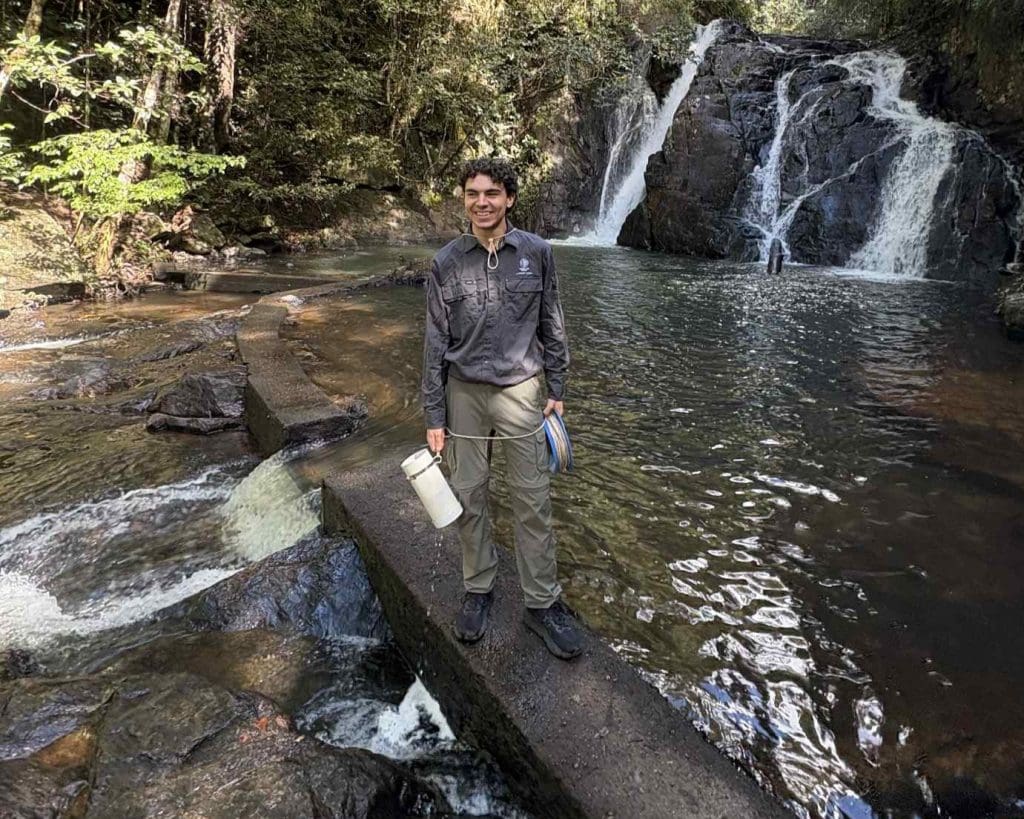
Future Career Goals:
My long term goal is to pursue a PhD in hydrology and build a career focused on advancing knowledge in water science. I am particularly interested in continuing research into surface water and groundwater interactions and their implications for sustainable land and water management.
Following postgraduate study, I hope to either work within academia, where I can share my passion for environmental science through teaching and mentoring, or contribute within government, helping to shape evidence based policy and deliver meaningful environmental outcomes.
Ultimately, I want my work to contribute to stronger water management systems across regional Australia, supporting communities that depend on resilient natural resources.
To be completed.
To be completed.