


Research Questions/Objectives:
Aims are as follows:
Brief Description of the Project:
Vision Language Models (VLMs) can interpret images and respond to natural-language questions, making them attractive for practical decision support in agriculture. However, robust performance remains uneven for fine-grained tasks such as distinguishing visually similar weed species or diagnosing crop diseases under variable field conditions. AgroBench (Agronomist AI Benchmark) is a recent, expert-annotated benchmark designed to evaluate VLMs across seven agricultural question-answering tasks: Disease Identification (DID), Pest Identification (PID), Weed Identification (WID), Crop Management (CMN), Disease Management (DMN), Machine Usage QA (MQA), and Traditional Management (TM). It includes broad category coverage (for example 203 crop categories, 682 disease categories, 134 pest categories, and 108 weed categories) and reports that weed identification is among the most challenging tasks for many open-source VLMs.
This project will (1) build a reproducible evaluation pipeline to test recent general purpose VLMs on AgroBench, (2) conduct a detailed error analysis to identify why models fail (for example perception errors versus missing agronomic knowledge), and (3) design and validate one or two improvement strategies focused on weed identification and optionally disease identification. Improvements will be explored in an open ended but rigorous way, such as better prompting and grounding, retrieval augmented guidance from trusted agronomy sources, lightweight fine tuning or adapters using domain data, and hybrid pipelines that combine detection or segmentation with VLM reasoning. The outcome will be a clear benchmark report, an open codebase, and a set of validated methods that move VLMs closer to trustworthy, field relevant performance in Tropical North Queensland agriculture.
Background and Significance of the Research Question to drought risk, vulnerability, preparedness, or resilience:
This project addresses drought resilience by improving how reliably Vision Language Models (VLMs) can detect and explain weeds (primary focus) and crop diseases (optional) from images, using AgroBench as the evaluation backbone. Drought increases production risk by shrinking the margin for error in decisions that affect water use and yield. Weeds directly heighten drought vulnerability because they compete with crops for scarce resources, including soil water, and research highlights that weed water uptake can exacerbate water constraints and threaten productivity and profitability [1].
In parallel, drought can alter plant defence and disease dynamics, potentially predisposing plants to disease or changing interactions among plants, pathogens, and vectors, making timely diagnosis and response more important during dry periods [2].
The significance of the research question is also practical: current general-purpose VLMs are not yet dependable for fine-grained agricultural identification. AgroBench reports clear “room for improvement”, and notably that weed identification performance for most open-source VLMs is close to random, which is a major barrier to safe, field-ready decision support. By benchmarking, diagnosing failure modes, and then improving weed (and optionally disease) performance, the project supports preparedness (earlier, more accurate scouting and triage), risk reduction (fewer missed or misidentified threats), and resilience (more targeted interventions). Precision and patch spraying approaches can reduce herbicide use and environmental residue risk, so better weed intelligence can also improve input efficiency when drought pressures tighten costs and increase catchment sensitivity [3].
The adoption of VLM technology fundamentally relies on the trust of the correctness of the models by key stakeholders. As of such, proper testing and benchmarking of cutting edge models is critical for the future of this technology.
Academic and research experience relevant to the honours project:
I currently study a dual degree in Electrical and Electronics engineering, as well as Science majoring in Physics. I have a strong background in programming and have previously done a research project for SC3003, which focused on developing computational models for plasma physics. Whilst this is not directly related to this, the programming and scientific computing expertise developed here would be very useful for this subject. Additionally I have a very strong academic record with a current GPA of 6.97.
I have a personal interest in AI/ML and have done considerable research/learning outside of university. I also do significant amounts of programming as a hobby, as of such I feel that I have the required background to effective undertake this project.
I grew up in North Queensland and I have family that are/were involved in farming, as of such I recognize the importance of minimizing the effects of drought.
Principal Supervisor’s skills and experience in relation to this project topic:
Below shows some key areas of expertise and research done by Mostafa.
Some papers of note:
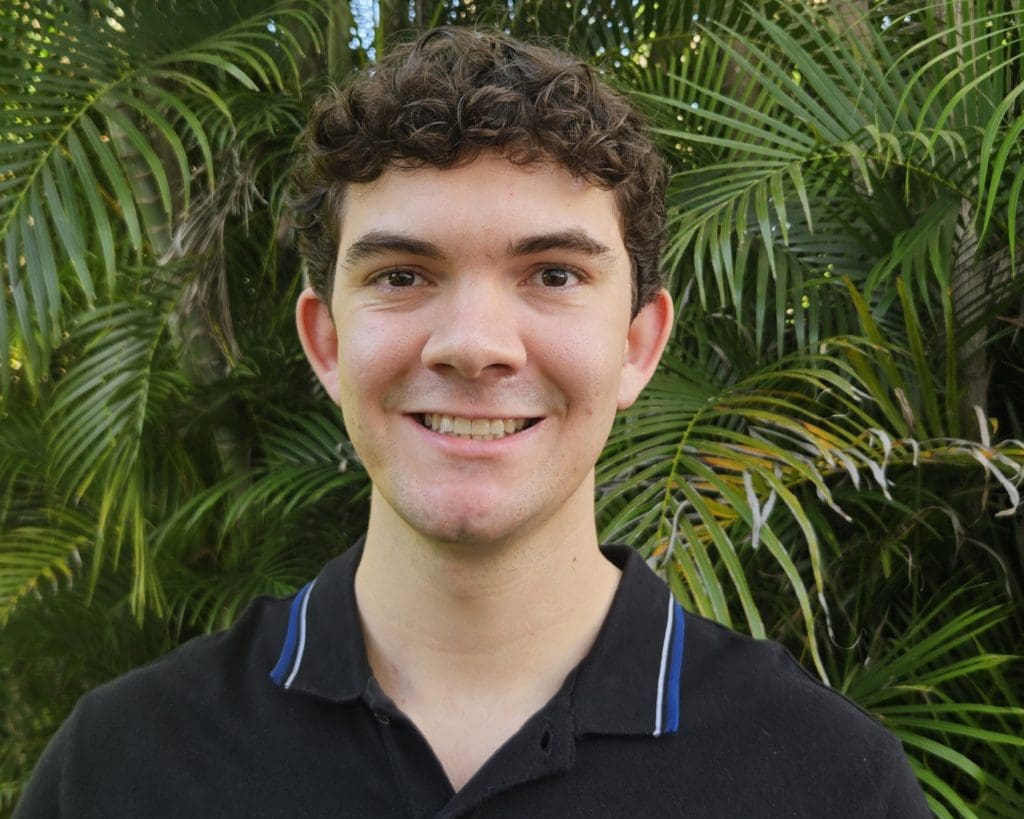
My name is Alex Christie and I am in my final year of studying a Bachelor of Engineering majoring in Electrical and Electronics, in combination with a Bachelor of Science majoring in Physics at James Cook University.
I’ve always loved solving problems, so Engineering was a natural fit for me from the start. I went through school really enjoying Maths and Physics, so the dual degree helped me to further a wide range of interests. Throughout my study, the AI/ML field has been extremely fascinating, and being able to apply emerging technologies in this field to NQ specific problems is an amazing opportunity.
I have spent most of my life in North Queensland, and I am passionate about the region and helping to address and solve issues found only here. Drought and food supply chain uncertainty are a growing issue in the region, and the development of emerging technologies in the industry are critical to keep the region thriving. Adoption of these emerging technologies relies on a solid foundation of trust from core industry stakeholders, which I believe my research will try to help establish.
Future Career Goals:
Once I graduate and I begin my professional career, I would like to continue working on novel and complex problems in the North Queensland region, and help to advance progress in local industry.
To be completed.
To be completed.