Key takeaway
The 2025 Australian Soil Judging Competition drew more than 200 participants, forming 35 teams, from across Australia, New Zealand and Fiji in Armidale for four days of hands-on learning, friendly competition and professional connection. Co-hosted by Soil Science Australia and the University of New England (UNE), this event plays an important role in building capability across Australia’s soil workforce.
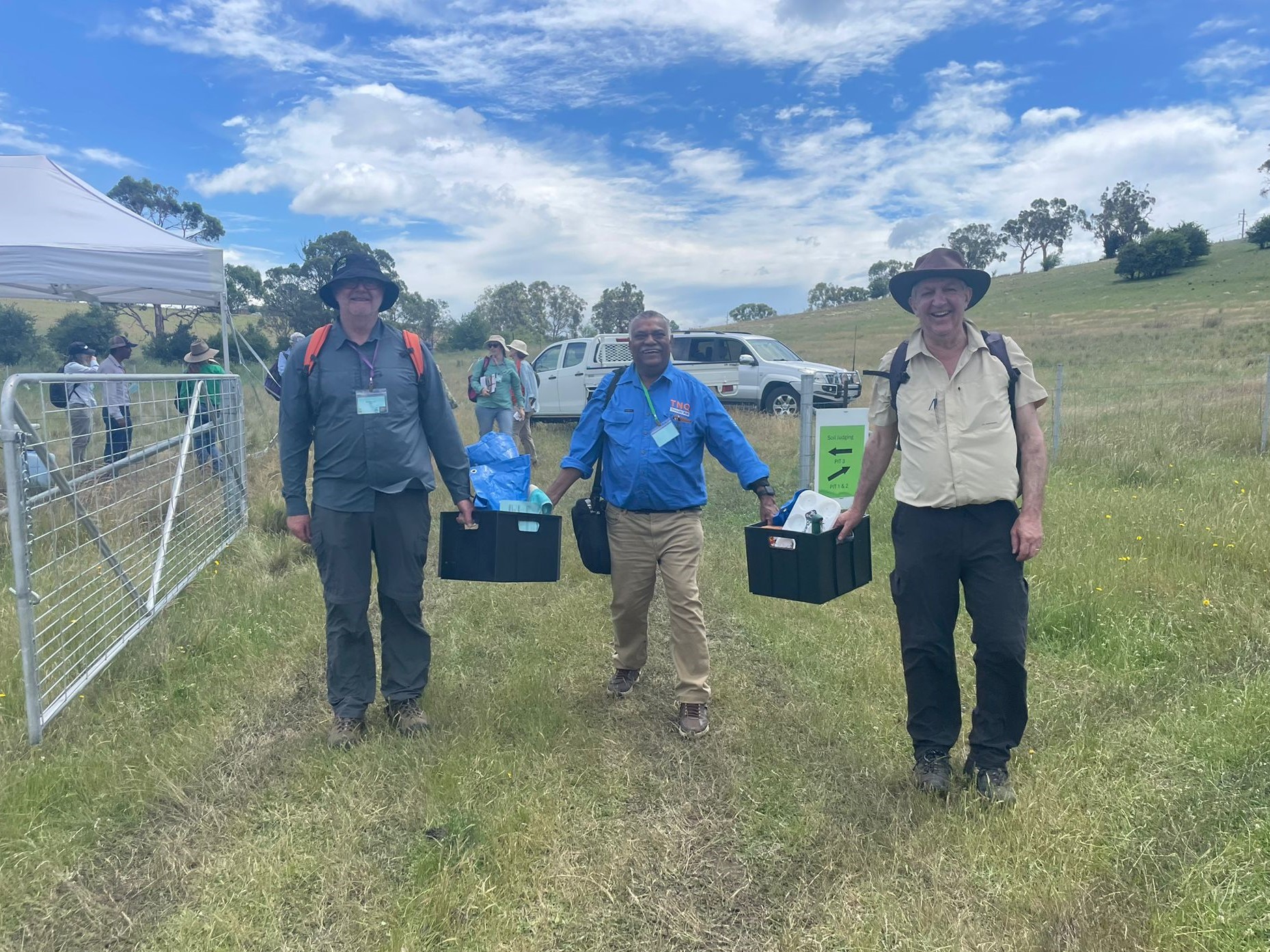
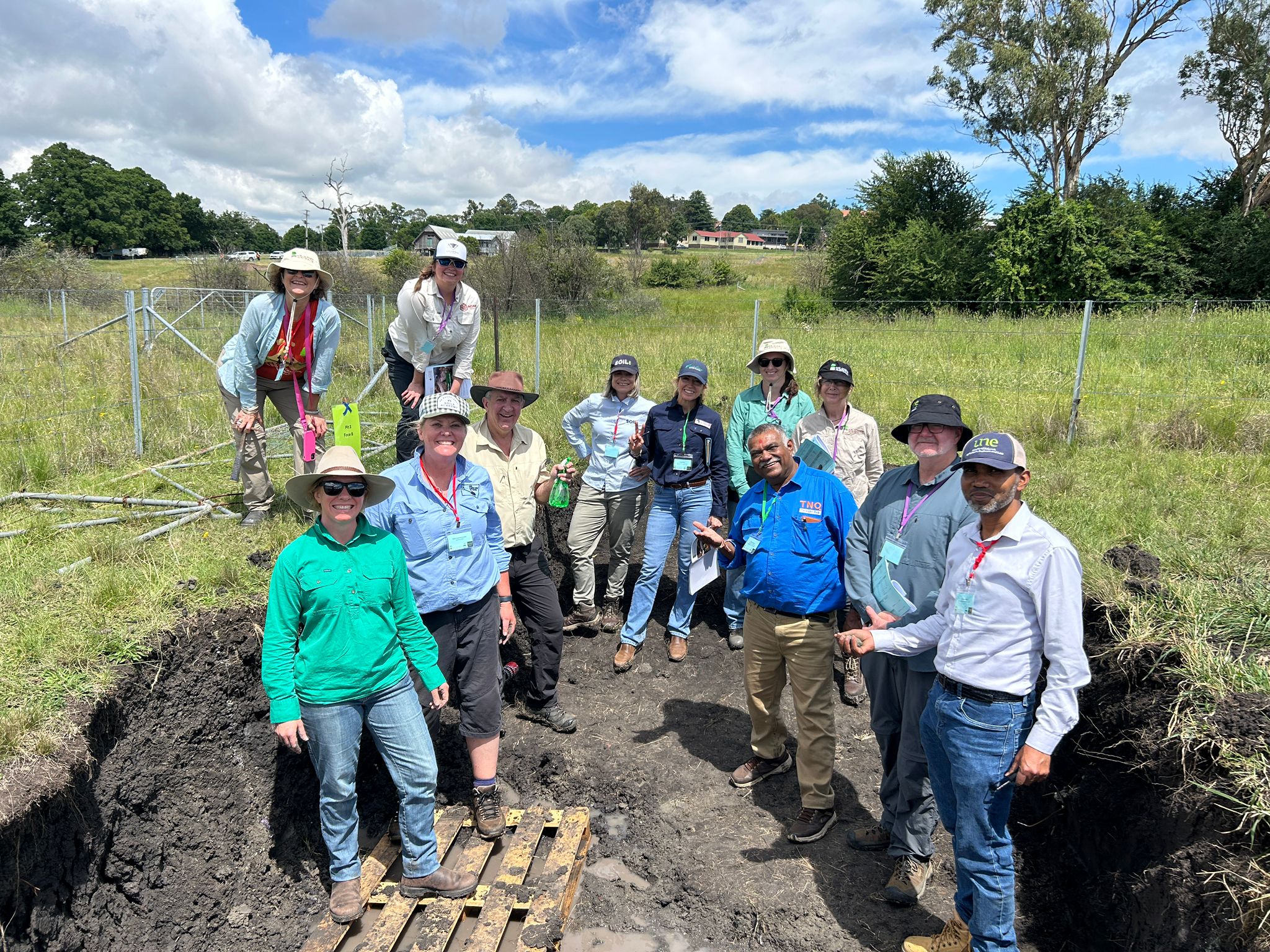
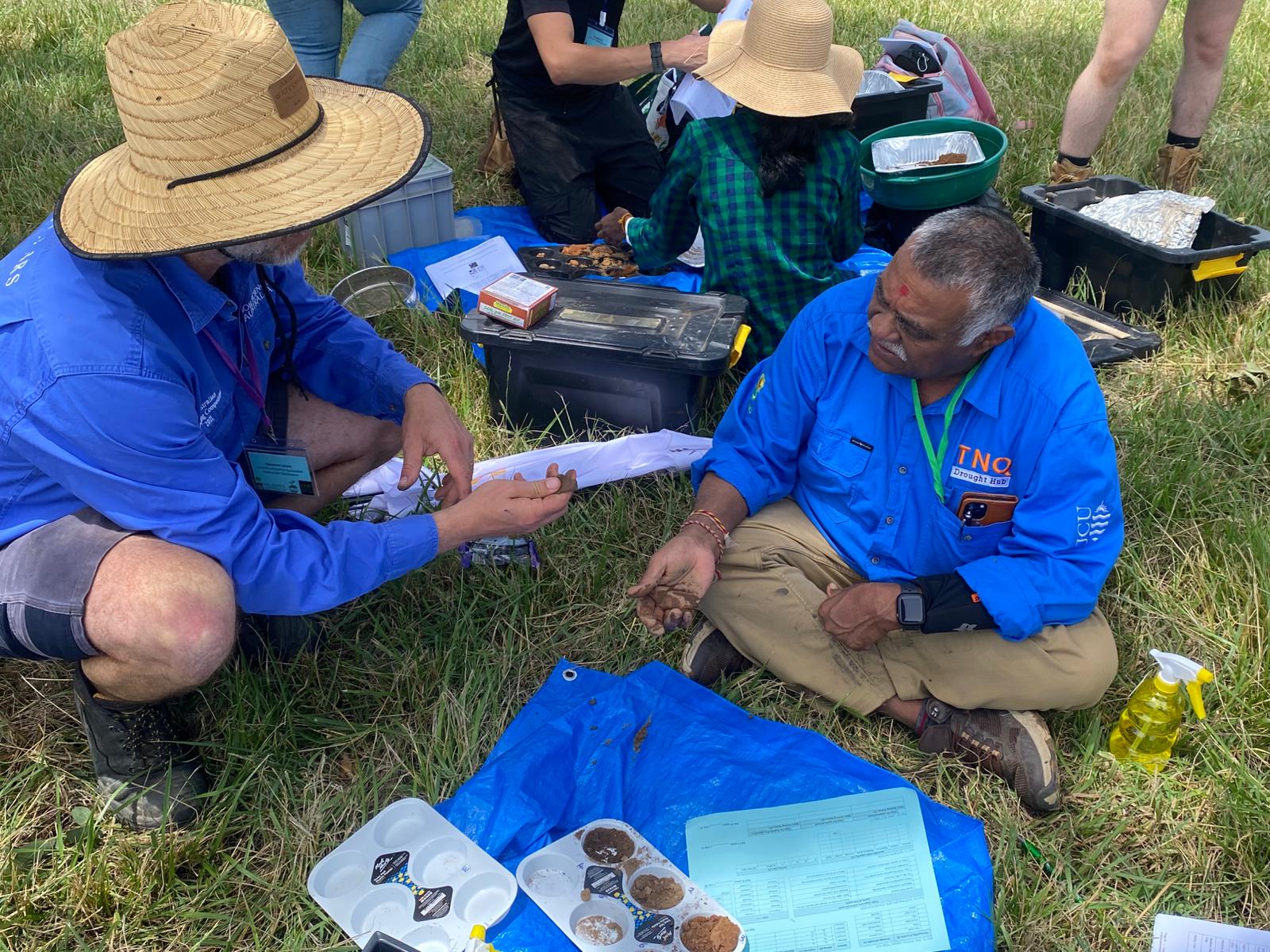
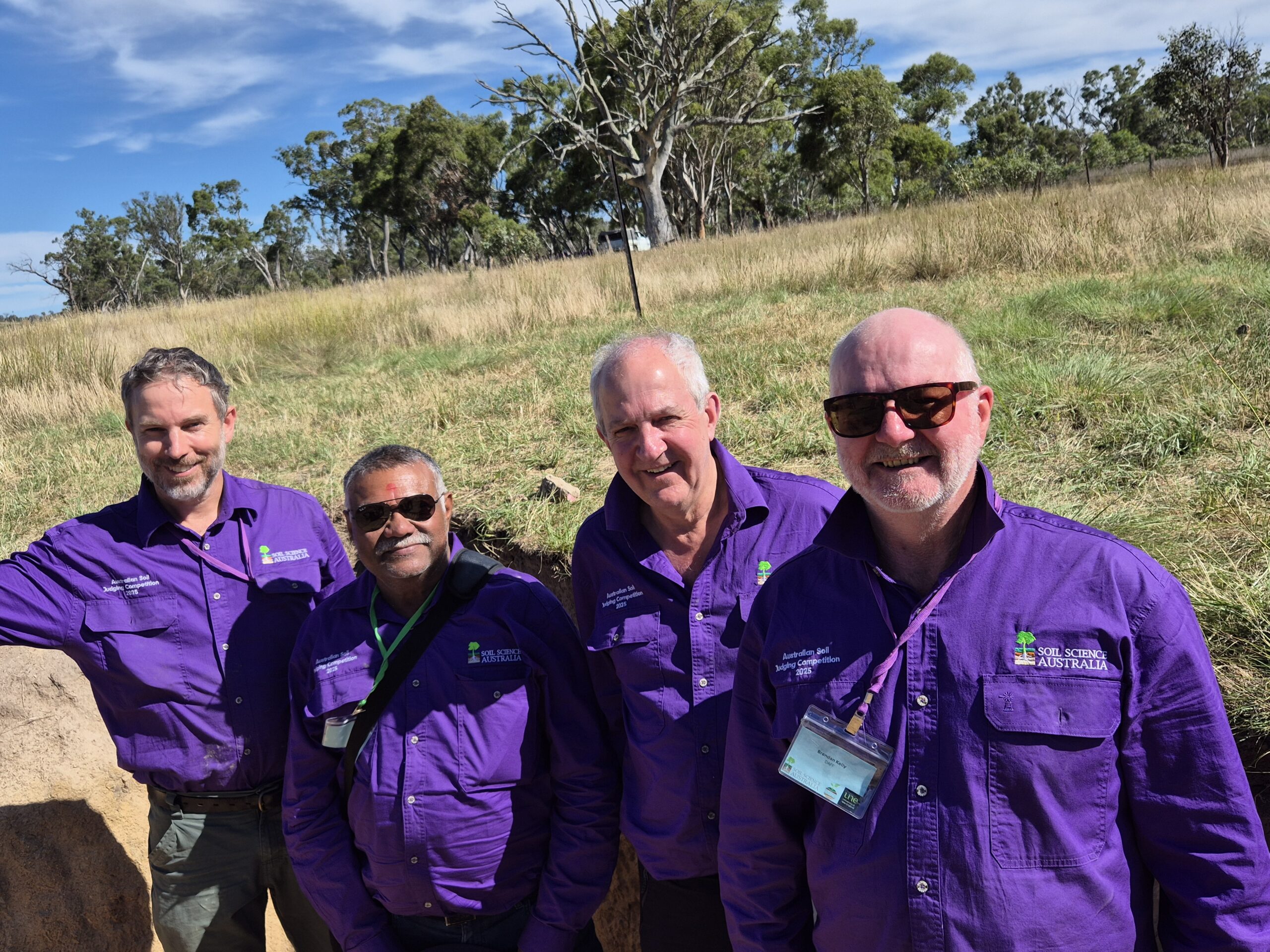
Among them were the eight Regional Soil Coordinators (RSC), including TNQ Drought Hub’s RSC Dhiraj Gajera. Dhiraj Gajera, who joined fellow Regional Soil Coordinators Cameron Leckie and Peter Fisher and Department of Agriculture, Fisheries and Forestry’s Brendan Kelly to form the RSC Team.
Before the competition, the RSCs held their second face to face meeting for the year. This was an opportunity to strengthen group ties and enhance information sharing and practical knowledge on implementing climate smart agriculture as the Smart Soils National Community of Practice. The group met with a panel of Soil CRC members, explored the latest scientific plant sensing and soil moisture technologies at ICT international, and visited two cattle properties.
The competition opened on Wednesday, with a warm welcome function and an unexpected plasticine soil structure challenge where attendees had to sculpt polyhedral soil structure shapes as accurately as possible. The winning models were so accurate they were later turned into 3D-printed teaching resources for future soil workshops.
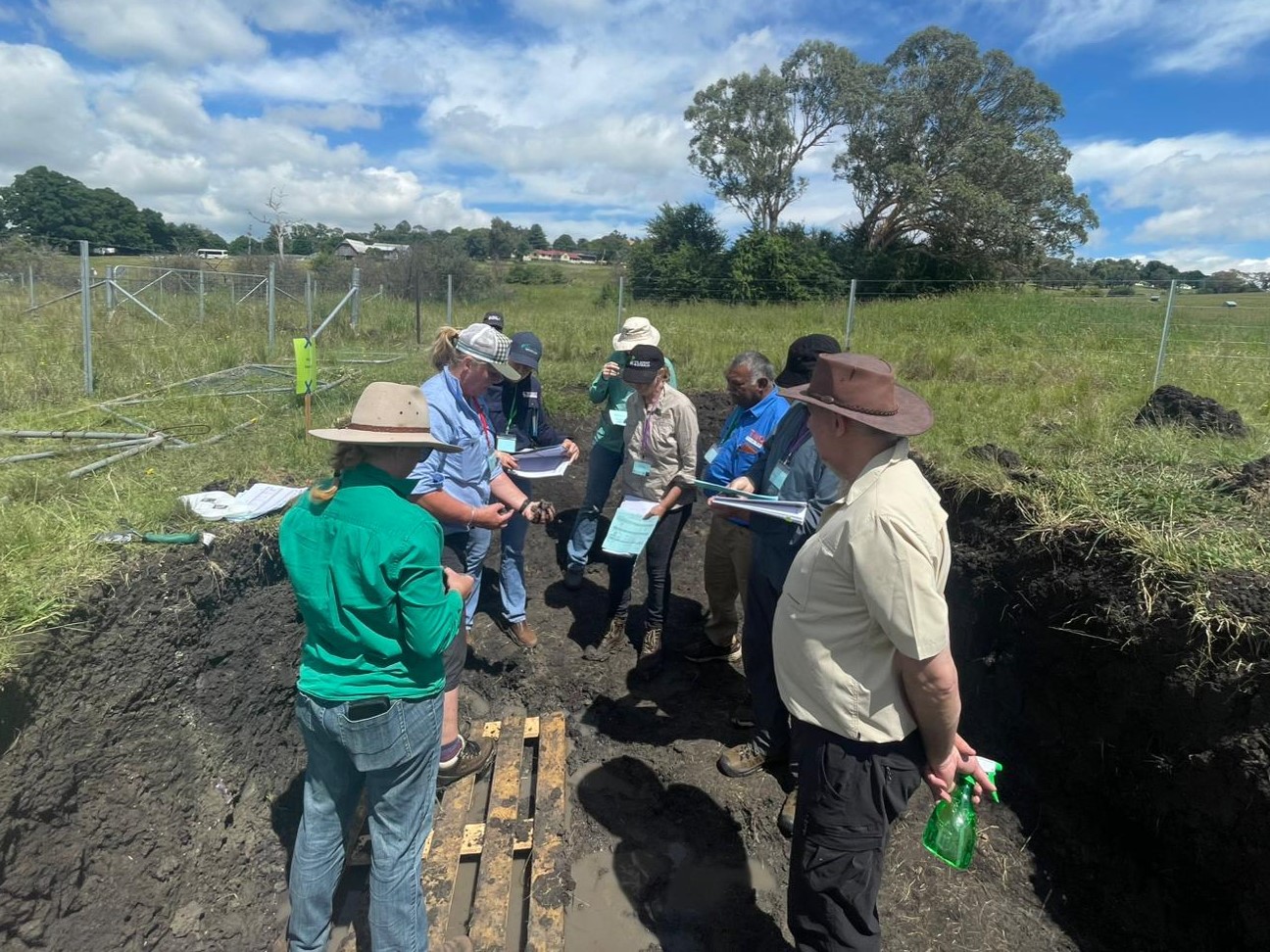
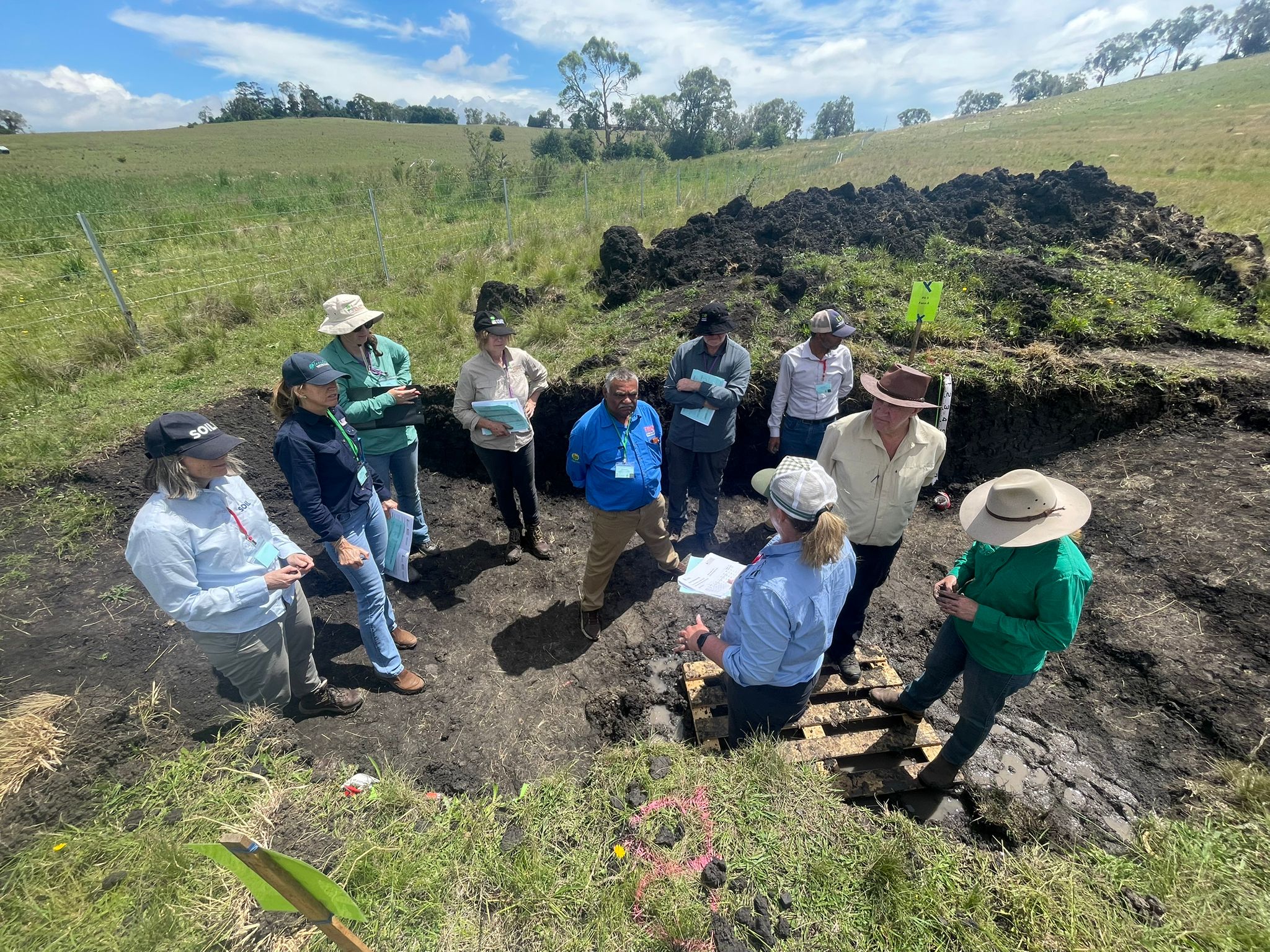
The following two days were filled with training as teams rotated through eight soil pits across UNE farms. Each pit represented different stories in the landscape, showing variation in texture, structure, horizons and land-use history, giving participants a chance to deepen their technical skills and refine their eye for detail.
These immersive training days offered exactly the kind of practical experience that supports good land management decisions. For producers and early-career soil professionals, understanding soils at this level helps strengthen long-term planning, pasture management and drought preparedness.
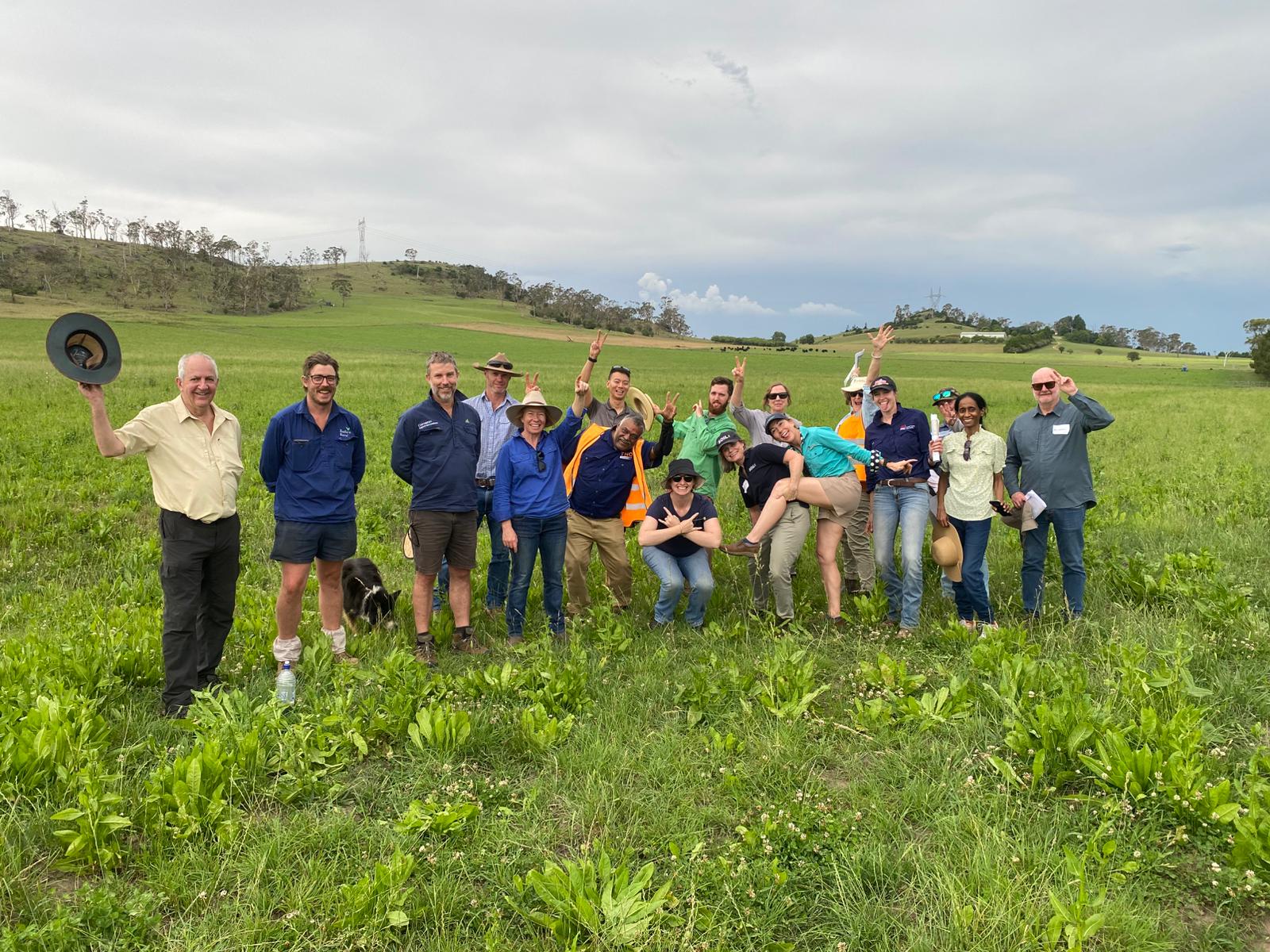
The final day was held at Balala Station, a property well known for its regenerative land management. With its mix of soil types and grazing history, the station was an ideal proving ground for teams to apply what they’d learned. Teams completed four rotations that included two team pit assessments, one individual pit assessment and a rest rotation, working to classify soils such as Brown Sodosols, Brown Chromosols and Black Sodosols.
Balala Station showcased how soil condition reflects management decisions, something producers see every day on their own properties. The competition emphasised the connection between landscape stewardship and productive, resilient farming systems.
After an intense week of field assessments, classification challenges and teamwork under pressure, the week concluded with an awards dinner. The RSC team proudly finished equal third in the Early Career Professionals division, an impressive achievement in a highly competitive field.
For Dhiraj and the rest of the team, this award was a proud moment that highlighted not just individual skill, but the strength of collaboration across the national Smart Soils Community of Practice.