Background
Reliable internet access underpins modern farming, but for many North Queensland producers, connectivity challenges remain a daily frustration. Issues such as seasonal landline disruptions, patchy mobile coverage, slow speeds, and outdated, data-limited plans hinder not just the adoption of proven AgTech solutions that could improve business operations and drought resilience, but impact essential services such as education and healthcare and the delivery of extension services.
Recognising this barrier, the TNQ Drought Hub led a project to trial Low Earth Orbit (LEO) satellite internet technology in rural locations across North Queensland. Unlike traditional satellite systems, LEO satellites operate at lower altitudes, offering faster speeds and lower latency, opening new opportunities for remote paddocks, stock camps, and yards that previously had no connectivity.
Why This Matters
Connectivity is foundational to modern rural resilience. Without reliable internet, producers are unable to access digital tools that could improve productivity, sustainability, and community wellbeing.
The TNQ Drought Hub saw an opportunity to trial Low Earth Orbit (LEO) satellite technology, specifically Starlink, as a potential solution to bridge this digital divide and empower rural communities.
Access to reliable, fast internet enables:
What We Did
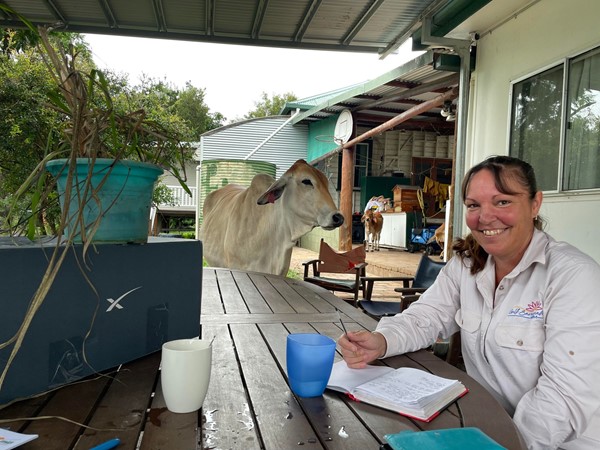
Twelve Starlink units were deployed across North Queensland’s diverse landscapes, from highly remote cattle stations to outer suburban properties. The TNQ Drought Hub partnered with hub Node Gulf Savannah NRM staff to identify suitable trial participants and ensure alignment with local needs. Simultaneously, hub Node NQ Dry Tropics began a dedicated six-month trial across the Burdekin Dry Tropics region to test Starlink’s reliability and speed for field officers working in areas with limited or no internet service.
Participants were supported to install and test Starlink, assessing:
Feedback was collected over 6-12 months to compare Starlink with existing services, understand user experiences, and identify opportunities for wider connectivity improvements.
What Changed
Opportunities for Improvement