North Queensland research shines at 2025 ANZAM Conference
Key takeaway
Dr Jane Oorschots’s research highlights that managing people is just as critical as managing climate risk, labour shortages and seasonal pressure. Strong teams underpin productive, resilient farm businesses.
Being clear about what regional life is really like matters. Honest conversations about location, lifestyle and how work and personal life can overlap help set realistic expectations and reduce staff turnover.
Employees are more likely to stay when they feel connected, not just to the job but to the community. Investing time in workplace culture and local networks can pay off in long-term workforce stability.
Research grounded in North Queensland workplaces took centre stage at the 2025 Australian and New Zealand Academy of Management (ANZAM) Conference, held at Deakin University’s Geelong Waterfront Campus from 2 to 4 December.
The conference, themed “Alternative Truths in Management: Dare to Challenge the Status Quo,” brought together academics, industry practitioners and emerging researchers from across Australia, New Zealand and beyond. Across three days of presentations, workshops and discussions, delegates explored new ways of thinking about leadership, people management and organisational resilience in changing environments.
Among the presenters was Dr Jane Oorschot, who shared findings from a study co-authored with Dr Leigh-Ann Onnis titled “The Role of Human Resource Management Practices in Fulfilling the Psychological Contract in Regional Contexts.” The research draws directly on experiences from North Queensland, with participants from Cairns, Townsville and Mackay.
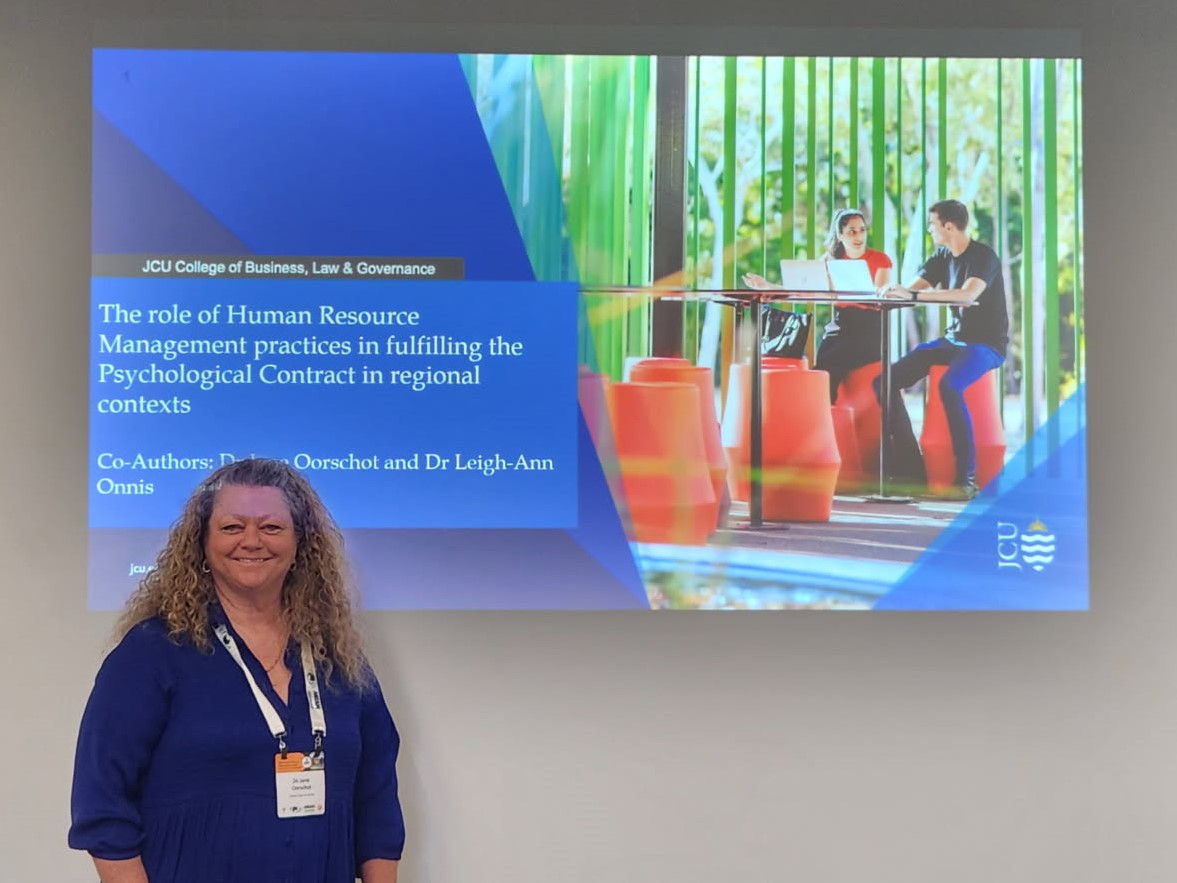
Dr Jane Oorschot with their presentation
The study examined how recruitment practices, early employment experiences, relationship building and communication shape expectations between employers and employees in regional areas. According to Dr Oorschot, success in regional workforces comes down to three critical factors.
“Proximity matters,” Dr Oorschot explained. “Employers need to clearly communicate what living and working in a regional area actually looks like, including how work and personal life can overlap.”
Strong relationships were another defining factor, both inside and outside the workplace.
“Building connections isn’t just about the job,” she said. “In regional communities, workplace relationships and community ties play a big role in whether people stay and thrive.”
Clear, honest communication rounded out the findings.
“Providing realistic job previews and context-specific information helps people make informed decisions and builds trust from the very beginning.”
While the research was presented in an academic setting, the implications are highly relevant for primary producers and regional businesses across North Queensland. Attracting and retaining skilled people remains a challenge for many producers, particularly during periods of climate pressure, labour shortages and changing workforce expectations.
The TNQ Drought Hub aims to support stronger regional networks, sharing evidence-based insights and building capability across communities. This helps producers navigate not only climate and drought challenges, but also the people and business decisions that underpin long-term resilience.
Research like this reinforces that sustainable agriculture is about more than seasonal conditions. It is also about people, communication and community connection, all central to building a resilient future for North Queensland agriculture.
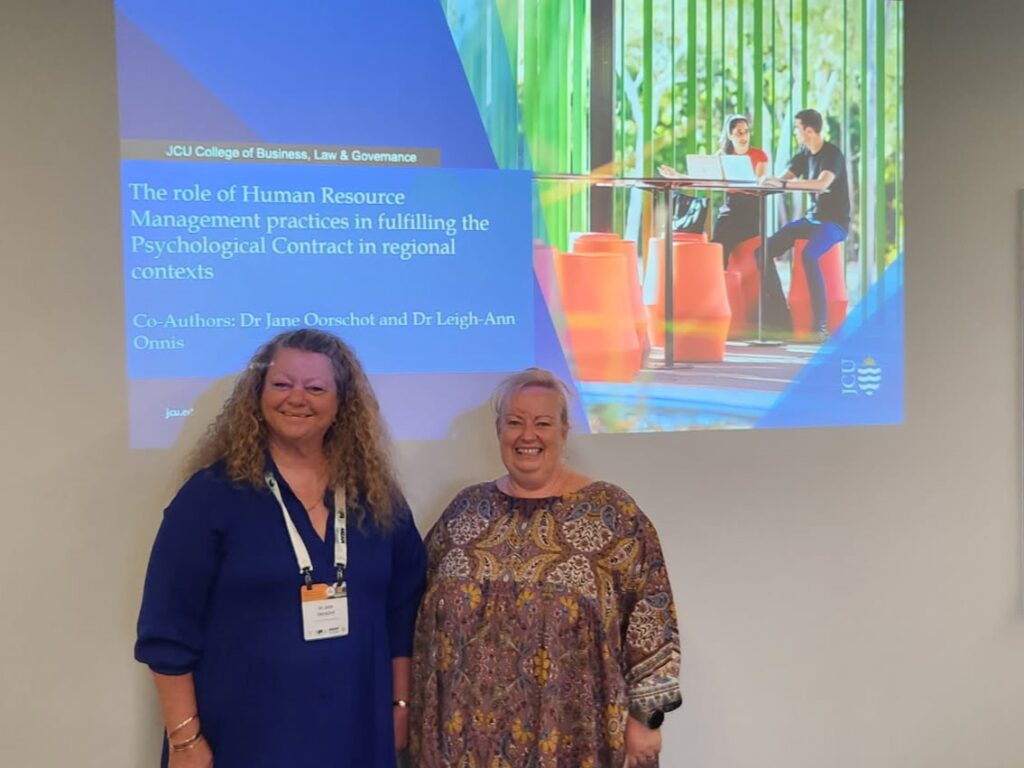
Dr Jane Oorschot with co-author Dr Leigh-Ann Onnis