Tech only works if it solves a real business problem. Do not adopt AgTech for the sake of it. Start with the core issue in your business. Identify the biggest “leaky bucket” affecting profitability, then use technology strategically to fix it.
Strong regional networks are just as important as new technology. When groups align their efforts, it becomes easier for producers to access relevant programs, research and support at the right time.
By connecting organisations and improving awareness of what support is available, the hub is helping create clearer pathways for producers to access practical tools, services and research.
Strong regional networks are proving just as important as new technology when it comes to supporting producers across Central Queensland.
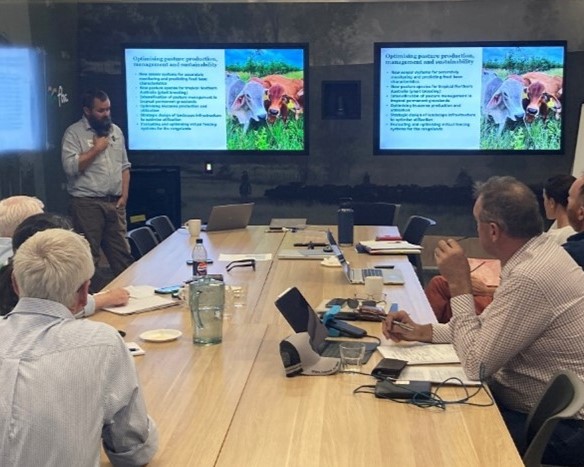
In December 2025, TNQ Drought Hub Adoption Officer Jane Barker attended a CQ Livestock Centre of Excellence meeting at the FBA Flow Centre in Rockhampton. The meeting brought together representatives from Fitzroy Basin Association, Central Queensland University, the Department of Primary Industries and industry leaders to share updates, strengthen collaboration and identify practical opportunities for producers.
A highlight of the day was a presentation from producer, consultant and teacher Jess Bidgood, arranged by Jane. Jess shared insights into how her family approaches AgTech use within their cattle grazing business. Rather than adopting technology for its own sake, their decisions and use are driven by clear business goals.
Jess encouraged producers to ask practical questions before investing.
What problem are you solving?
What data do you need?
How will information be shared and acted on?
Presentations at the meeting help improve coordinated efforts across organisations
She spoke about identifying “the biggest leaky bucket” in the business and using technology in a disciplined way to address it. For livestock producers navigating tight margins and seasonal variability, this approach resonated strongly.
For Jane, the event reinforced the importance of coordinated effort across organisations.
“These regional meetings are incredibly valuable because they help people and organisations collaborate,” Jane said. “When we understand what local organisations are delivering, we can link producers to the right projects, research and services at the right time. It means better conversations on farm and stronger outcomes for everyone involved.”
Future meetings will rotate through different hosts to explore diverse themes and production systems.
Beyond the formal agenda, the real impact came from conversations in the room. By strengthening connections, building a common language across agencies and improving awareness of available programs, the hub aims to help ensure producers have clearer pathways to information and support. In a climate where timely decisions matter, that kind of coordination makes a real difference on the ground.