Key takeaway
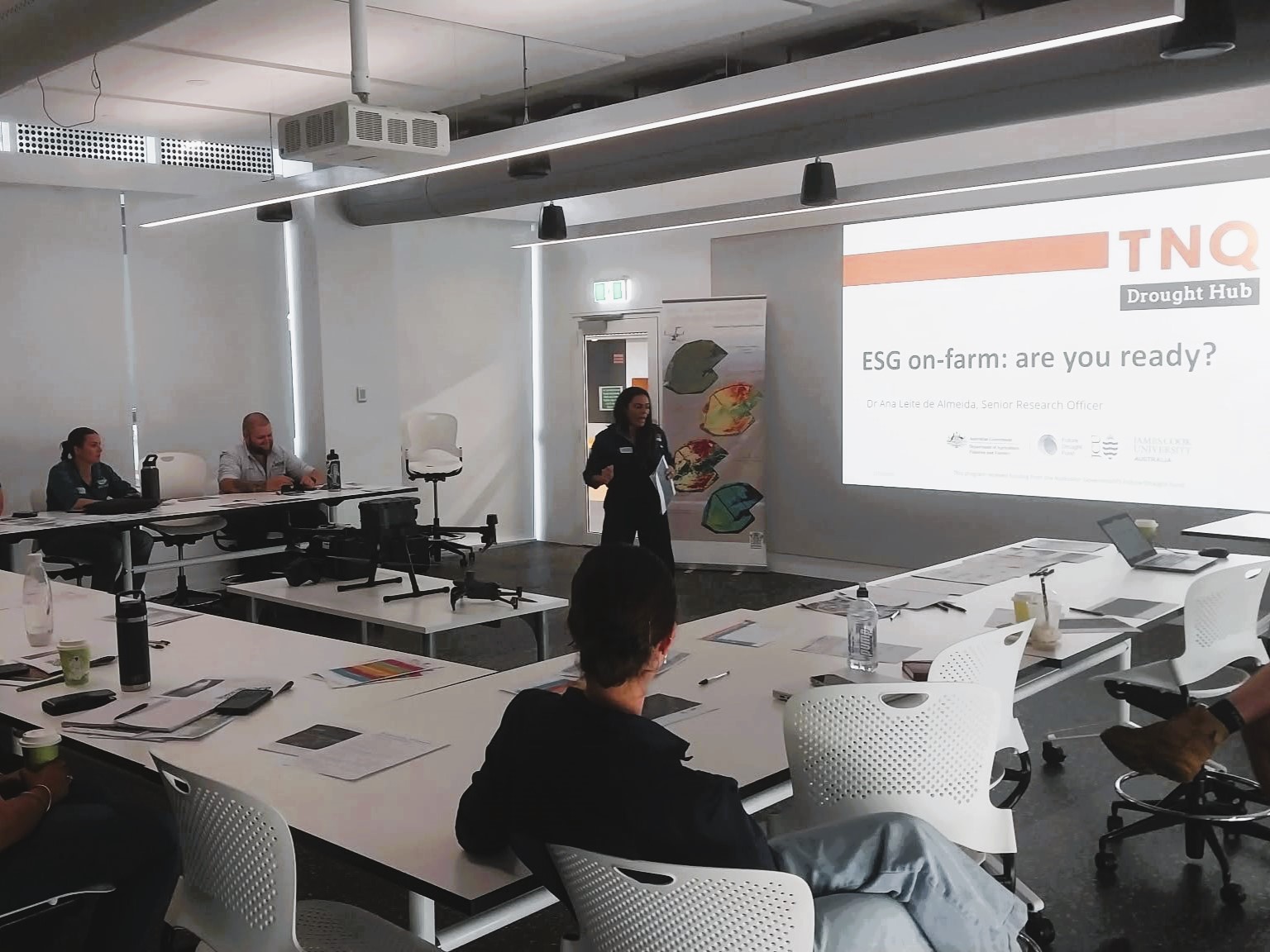
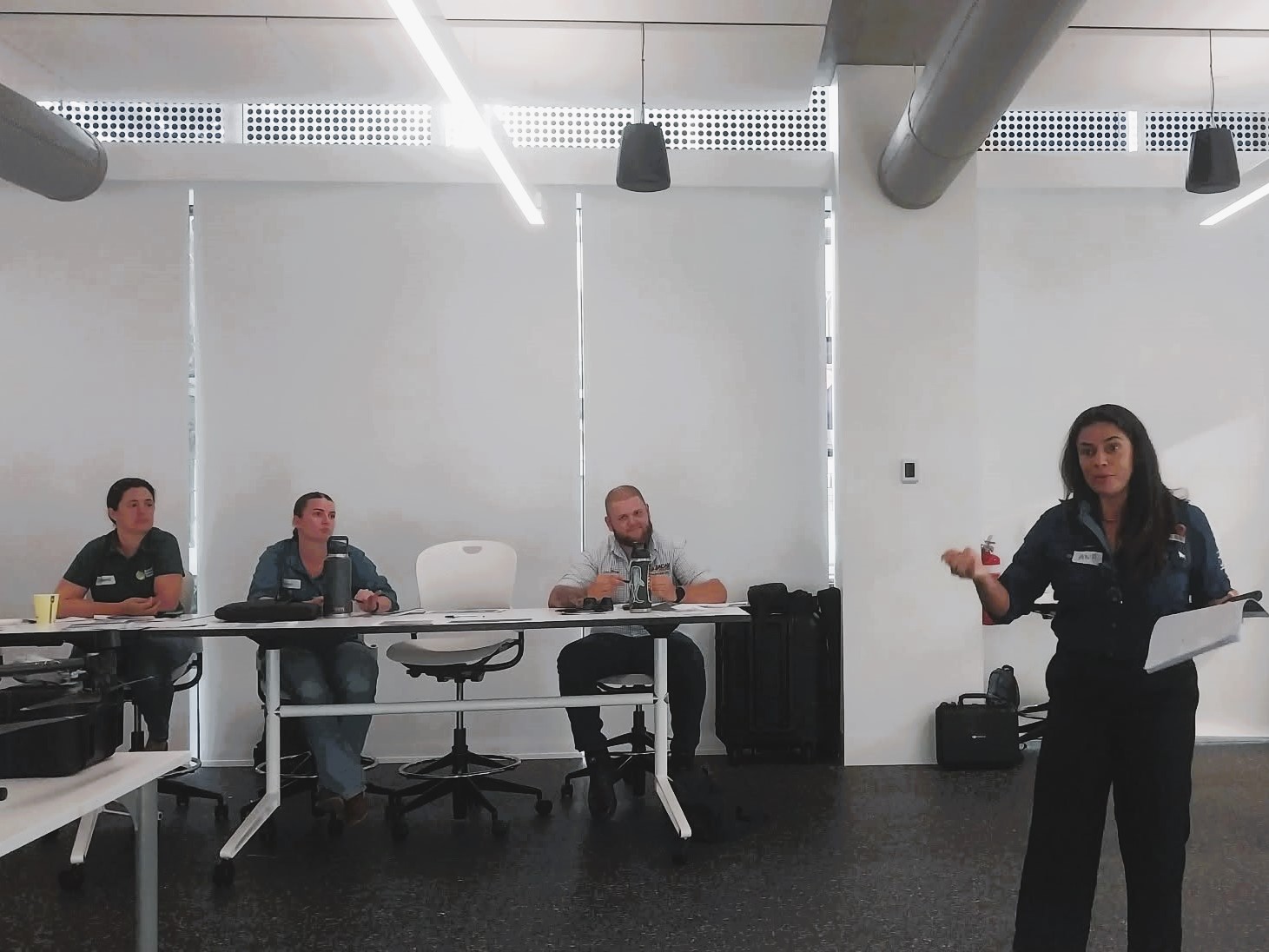
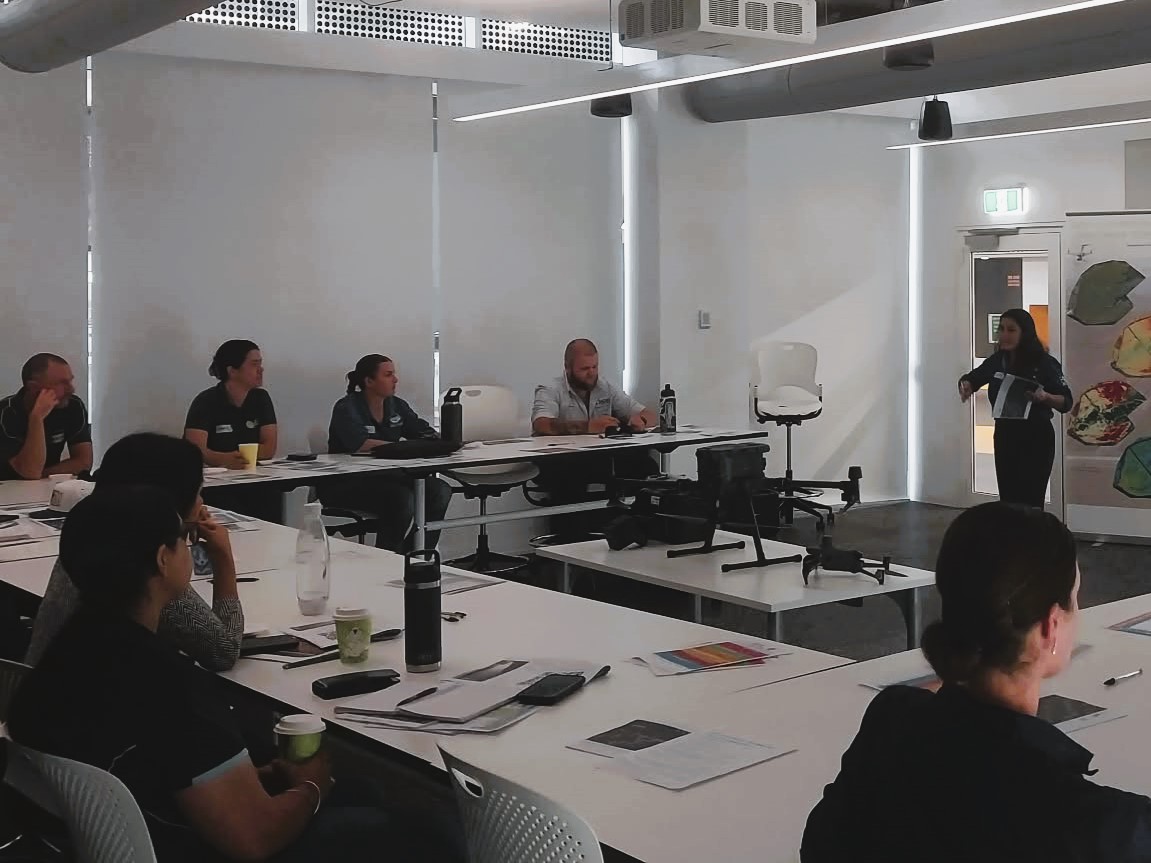
TNQ Drought Hub ESG and Natural Capital expert Dr Ana Leite de Almeida joined producers, advisors and AgTech enthusiasts in Cairns and Emerald in December as part of the Queensland Farmers’ Federation (QFF) Queensland Agritech Meetups. Held in celebration of Queensland AgTech Month, the meetups offered a casual, community-focused space for locals to connect, swap ideas, and explore how emerging technologies can strengthen on-farm decision making.
Understanding ESG and the benefits it can bring to producers can be challenging – particularly in Australia, where many growers are already implementing best practice and using modern technologies to improve production. Yet despite this progress, sustainability reporting remains difficult, fragmented, and often viewed as an administrative burden. Too often, ESG has become associated with greenwashing risk rather than with a practical decision support. The critical question is not whether producers are doing “enough”, but why current ESG systems still fail to capture what is actually happening on farms, and why they are not yet helping producers make better decisions, manage risk, and demonstrate the real value of their land stewardship.
Ana encouraged producers and technicians to rethink how sustainability is measured and reported. Today’s landscape is dominated by metric fatigue and misaligned frameworks that create an epistemic mismatch between what is measured and what actually matters on farms.

As a result, ESG assessments frequently feel irrelevant to producers, disconnected from day-to-day management, and unable to reveal the full economic, environmental, and strategic value already embedded in their landscapes.
Ana emphasised that ESG does not need to be complex or burdensome. Many of the tools now being developed and trialled (including through the hub) can be built gradually and embedded within existing property management systems. What matters most is starting with the right metrics and building a consistent, credible evidence base over time. When done well, ESG shifts from a reporting exercise to a strategic asset: a way to make resilience visible, decisions stronger, and the natural capital producers manage both recognised and valued.
Alongside the discussion on ESG, attendees also heard from Dr Rachel Hay from Better Internet for Rural, Regional & Remote Australia (BIRRR). Her session on Connectivity Literacy highlighted another critical piece of the resilience puzzle: reliable digital connectivity.
Rachel demonstrated how improved connectivity can expand the capability of farm businesses, whether through remote monitoring systems, cloud-based record keeping, access to real-time climate and market information, or the ability to trial new agtech tools with confidence. For many producers, better connectivity isn’t just about convenience. It directly impacts productivity, profitability and the ability to make timely, informed decisions.
The Queensland Agritech Meetups provide a valuable chance to listen, share practical guidance, and reinforce the importance of understanding both the natural and digital assets that underpin a modern, adaptable farming business.