Producers Explore Practical Genetics Tools to Boost Productivity and Resilience
Key takeaway
Producers saw firsthand how genetic tools and herd data can strengthen breeding decisions across northern systems, helping improve long-term performance and business resilience.
Speakers emphasised the value of a one-page herd summary and a clear management calendar to stay focused through seasonal variability. Consistent data collection, knowing what to record, where it goes, and how it informs decisions, was highlighted as a major area for improvement.
The Hub’s Adoption Officer, Jane Barker, attended and contributed to discussions, helping connect producers with practical insights and reinforcing the Hub’s commitment to supporting data-driven decision-making and improving resilience across North Queensland.
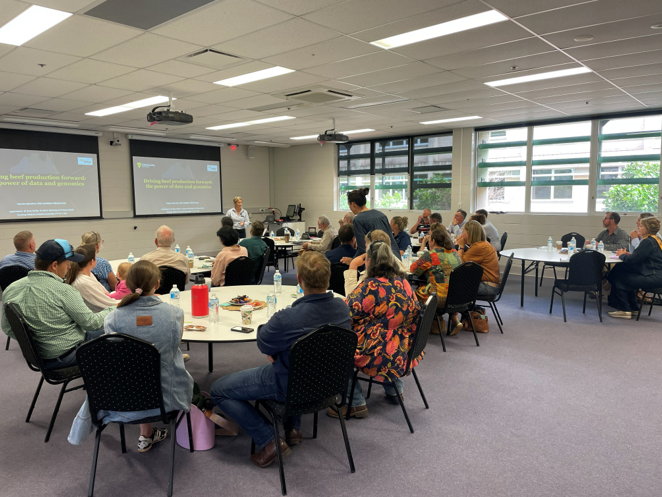
Beef producers from across Central Queensland gathered at CQUniversity’s Central Queensland Innovation Research Precinct (CQIRP) on 17 November to explore how data, genomics and practical herd insights can strengthen breeding decisions across northern Australia. Hosted by CQU and attended by TNQ Drought Hub’s Adoption Officer Jane Barker, the event drew strong support from producers keen to better understand how genetic tools can lift performance, productivity and long-term resilience.
Jane said the presentations encouraged practical conversations and encouraged producers to consider what data was important to making on ground decisions that better individual businesses.
Across the day, speakers and producers highlighted the importance of getting the basics right. A key practical tip was to keep a simple one-page summary of your herd operation and a clear herd management calendar. This helps keep priorities visible, especially through seasonal fluctuations that can easily pull focus away from long-term goals.
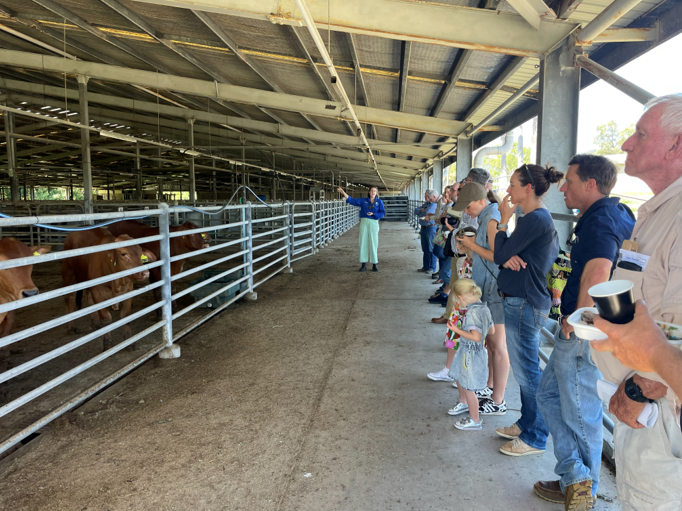
Attendees learn about projects exploring ways to reduce methane emissions.
Presenters also stressed the value of having a system that allows you to compare your business performance across years or paddocks, or against relevant peer groups. Consistency in data collection remains an area noted for improvement. It’s critical, to know what data to collect, where it is recorded and how it feeds into breeding and management decisions.
A producer panel featuring Shaun and Jo McGuigan, Richard and Victoria Moffat, and Alf Collins prompted some of the most engaging discussions of the day. The group shared their experience as Central Queensland seedstock producers and spoke candidly about balancing phenotype and genotype. They also discussed how different clients value genetic testing and information. .
The event wrapped up with a walk-through of methane abatement trials currently underway in CQU’s Animal House facility, where the Precision Livestock Management team are exploring ways to reduce methane emissions.
Events like this continue to highlight the appetite among producers for tools that improve productivity, resilience and decision-making.
Producers learning how genetics and herd data can strengthen breeding decisions.