TNQ Drought Hub
James Cook University Australia
Search

Healthy Soils, Stronger Futures and Measuring What Matters in North Queensland

Key takeaways

  • Soil health underpins resilience and productivity. Testing across the Di Bella farm showed that practices like cover cropping, compost, and minimal disturbance significantly improve soil carbon and microbial balance, creating richer and more resilient soils.
  • Practical changes deliver measurable results. The trial demonstrated that different management approaches directly affect soil health, with long-term commitment to soil stewardship producing the best outcomes for fertility and resilience.
  • Collaboration drives innovation. Partnerships between farming families, soil experts, and regional coordinators provide farmers with practical tools, knowledge, and support to build climate-smart, sustainable agricultural systems.
  • Dhiraj Gajera, TNQ Drought Hub Regional Soils Coordinator is supporting Tropical North Queensland farmers become more climate resilient through targeted services, facilitating partnerships and sharing knowledge. 

In the heart of Ingham, a collaborative effort between the Di Bella family and soil health expert Dhiraj Gajera is driving innovation in sustainable agriculture. With deep roots in the Herbert River region, the Di Bella family has farmed sugarcane and horticultural crops for nearly a century. Today, their commitment to soil stewardship is helping shape climate-resilient farming practices across North Queensland.

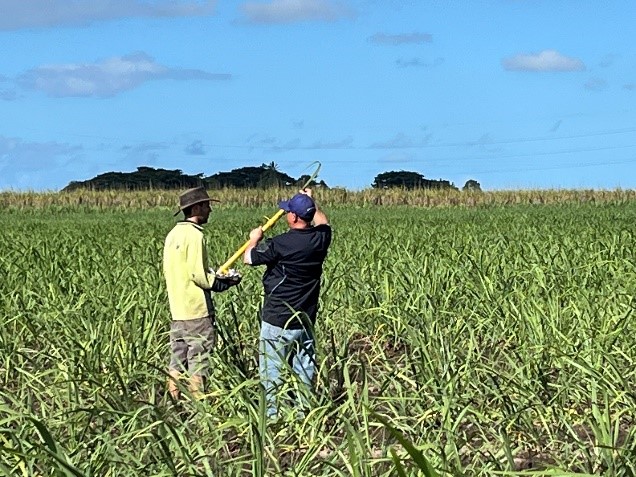
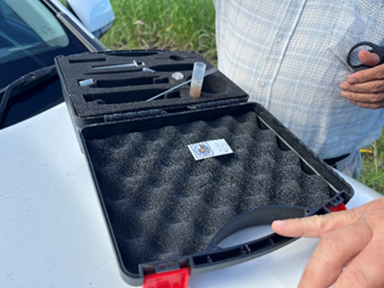
To better understand how different farming practices affect soil health, Hayden Di Bella and Dhiraj Gajera, Regional Soils Coordinator at the TNQ Drought Hub, tested three blocks on the Di Bella farm using a new device that measures key indicators of soil health. Instead of complex lab tests, this tool gives a snapshot of how much organic carbon is in the soil (an important sign of fertility) and the balance between fungi and bacteria, which are both vital for healthy crops.

Block 1, which hadn’t used cover crops or soil amendments, showed low organic carbon and more bacteria than fungi, suggesting the soil was less balanced and less fertile. Block 2 showed improved carbon and a more balanced microbial profile thanks to recent cover cropping and soil treatments. Block 3, which had been carefully managed for decades with cover crops, compost, and minimal disturbance, had the highest carbon levels and a strong presence of fungi, indicating rich, resilient soil.
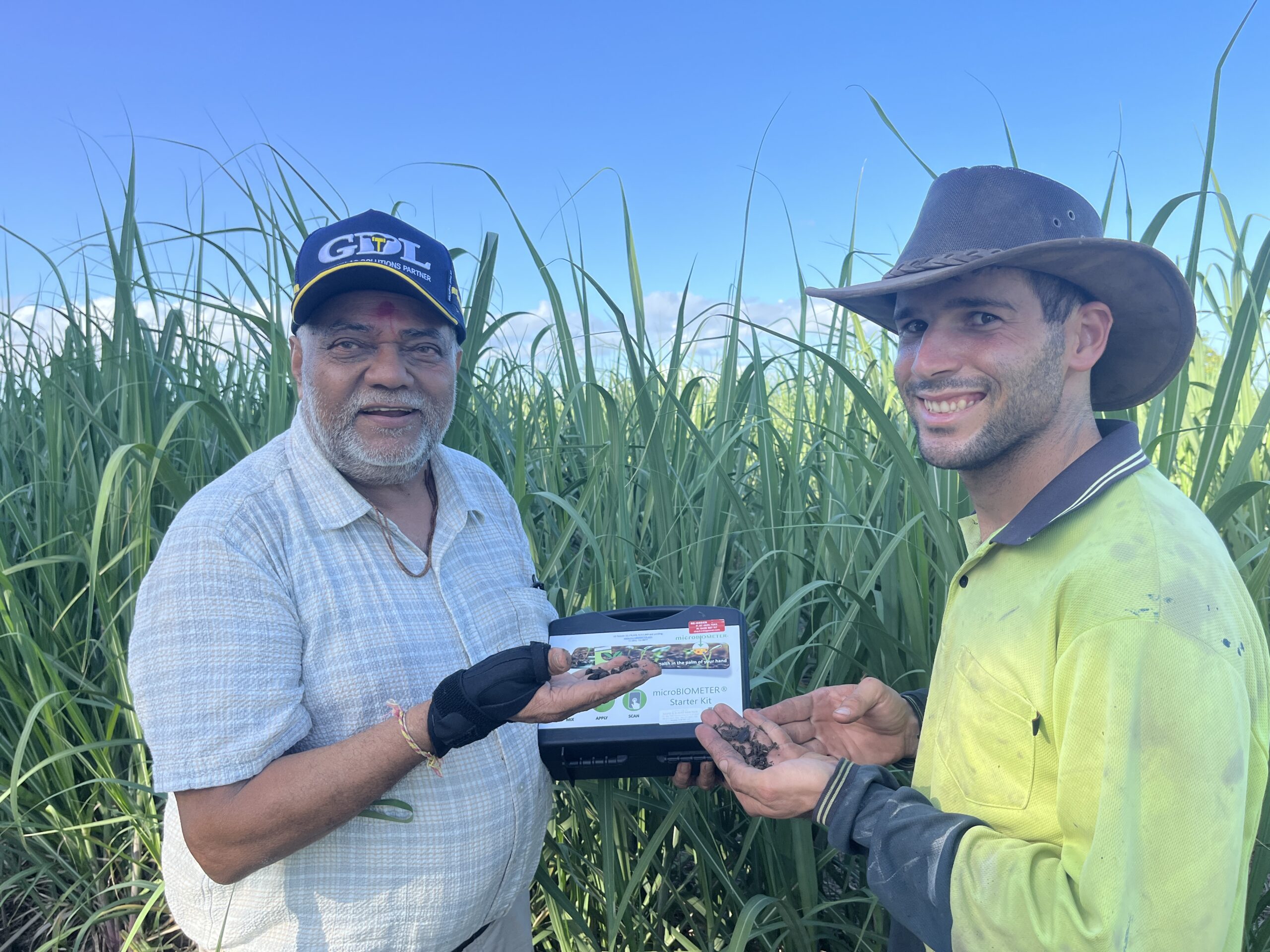
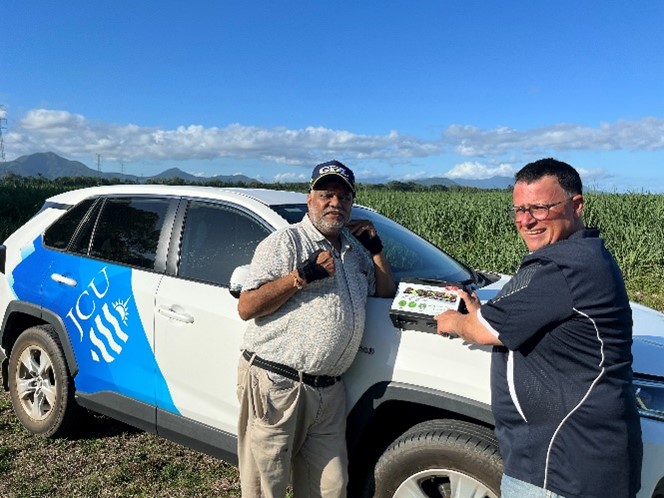
Regional Soils Coordinator Dhiraj Gajera and Hayden Di Bella
“These results are very encouraging,” said Hayden. “They support our approach to achieve good soil health. I believe that the use of cover crops, application of soil amendments (like lime-based products), trash retention and controlled traffic farming systems really work for our business. We can make soils better overtime by adopting practices that benefit soil health.”

Through hands-on collaboration and innovative tools, Dhiraj is helping land managers better understand and improve their soil health, ensuring long-term sustainability for agriculture in North Queensland.

“Healthy and fertile soil is critical to sustainability, improving the productivity and profitability of the agriculture industry, and delivering wider community and environmental benefits,” said Dhiraj.

The Regional Soils Coordinators across Australia support farmers and communities by delivering targeted soil services, facilitating partnerships with industry and researchers, and promoting practices that build climate resilience.

For more information about soil health, contact Dhiraj Gajera, Mobile 0424 018 003 Email: dhiraj.gajera@jcu.edu.au 

Important Insights About Soil Health
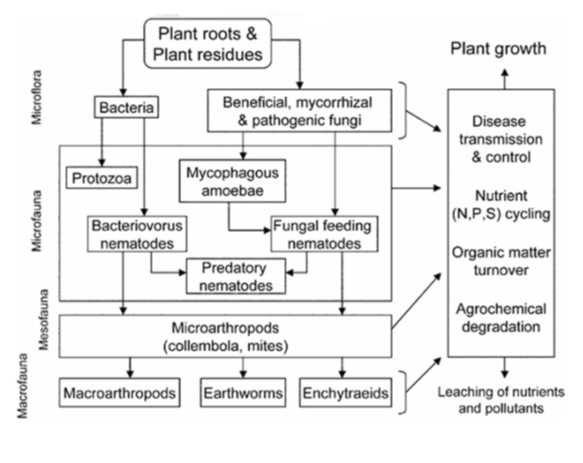
  1. Soil is a Living System: Healthy soil is teeming with life, from bacteria and fungi to earthworms and beetles. These organisms decompose organic matter, cycle nutrients, and support plant growth. A diverse soil food web is essential for resilience against pests, diseases, and drought.
  2. Ground Cover is Critical: Bare soil is vulnerable to erosion, moisture loss, and temperature extremes. Maintaining cover through mulch, trash blankets, or cover crops protects soil structure and feeds beneficial organisms.
  3. Minimise Disturbance and Compaction: Excessive tillage and heavy machinery disrupt soil habitats and accelerate organic matter breakdown. Controlled traffic farming, as practiced by the Di Bella family, helps preserve soil integrity and aeration.
  4. Diverse Plantings Boost Microbial Diversity: Rotating crops and planting mixed species fosters a rich microbial community. Legumes, for example, introduce nitrogen-fixing bacteria, enhancing soil fertility naturally.
  5. Organic Inputs and Amendments Matter: Compost, green manure, and products like mill mud provide stable food sources for microbes and improve soil structure. Managing pH with lime or gypsum ensures optimal conditions for soil life.
  6. Importance of Soil Testing and Monitoring: Regular soil testing helps provide an understanding of its biological health. Measuring and monitoring organic matter and organic carbon provides insight into soil fertility, microbial activity, and nutrient cycling and allows land managers to track improvements, adjust practices, and build more resilient, productive soils.
This diagram shows the organisms in the soil, what they feed on, and their impact on plant growth. Source: Gupta VVSR and Sivasithampram K, (2004) in Soil biological fertility (eds LK Abbott and DV Murphy) pp 163-185 Kluwer Acadmic Publishers.