


Research Questions/Objectives:
This study will aim to investigate the presence and quantity of the biomarker VTG in blood and skin mucus of barramundi during different developmental stages. Specific antibodies will be generated against purified VTG and used in different biochemical and immunological assays to determine sex change. This study will provide fundamental information about the modulation of this central biomarker of sex change in fish.
Brief Description of the Project:
Sex control is the most important factors for the commercialisation and efficient propagation of fish species. Without the ability to regulate sexual differentiation, maturation, and reproduction, there is little control over breeding processes. Sex determination and differentiation in fish is an evolutionarily diverse and highly plastic developmental process which leads to great challenges when trying to develop a general understanding of sex in fish.
Sex is not only determined through genetic factors but also by the environment. Barramundi fish change sex from male to female only after 4 or more years, and this is a major challenge for the growing aquaculture industry in Australia. Determining the sex of barramundi is not possible through visual observations, but can be achieved through measurement of biomarkers. Vitellogenins (VTGs) are large phospholipoproteins that serve as a source of lipid and protein egg yolk nutrients in many vertebrates and fish. They are produced in the liver, usually in response to female hormones, but can also be detected in some males. The VTGs seem to differ between fish species but specific antibodies can be used to distinguish and quantify VTG in fish.
Background and Significance of the Research Question to drought risk, vulnerability, preparedness, or resilience:
The resilience and preparedness of the barramundi aquaculture industry in Australia are closely tied to its ability to manage biological factors like sex differentiation. This study’s focus on understanding and controlling sex change in barramundi directly contributes to the resilience of aquaculture operations by enabling more predictable and efficient breeding cycles. Without control over sex differentiation, production systems remain vulnerable to inefficiencies caused by delayed maturation and sex change, which can lead to uneven stock availability, increased costs, and reduced output.
Moreover, barramundi aquaculture could be more prepared to handle external stressors such as drought or environmental changes if breeding control is optimized. During periods of drought, where water availability is limited, more efficient breeding and propagation strategies can help maintain production levels. By using biomarkers like Vitellogenin (VTG) to monitor and manage sex change, this research could help create resilient systems that are better equipped to cope with environmental challenges, ensuring sustainable production despite vulnerability to environmental factors like water scarcity.
In this way, the study supports long-term sustainability and resilience in the face of climate-related risks, including drought.
Academic and research experience relevant to the honours project:
Throughout my bachelor’s degree, I have consistently maintained a high academic standard, with a current GPA of 6.38. This semester, I have been working on a minor research project under the supervision of Dean Jerry and Jarrod Guppy, focused on validating commercial ELISAs for detecting estrogen and cortisol in barramundi plasma. If these kits prove to be sufficiently accurate, I plan to incorporate them into my honors project next year.
Principal Supervisor’s skills and experience in relation to this project topic:
Professor Dean Jerry’s extensive skills and experience are highly relevant to my project. As a globally recognized expert in aquaculture, Prof. Jerry has significant experience in applying genetic technologies to enhance farmed aquatic species, making him well-versed in the biological and genetic aspects critical to my research. His leadership in developing genetic tools and aquatic animal health solutions, including pathogen testing facilities, demonstrates his expertise in advanced technologies used to monitor and improve fish health.
Additionally, Prof. Jerry’s long-standing involvement with industry and research partnerships, coupled with his success in securing significant external funding, highlights his capability to guide complex, applied research projects like mine. His pioneering work in environmental DNA technologies also complements my research by reinforcing the importance of innovative biochemical tools in aquaculture.
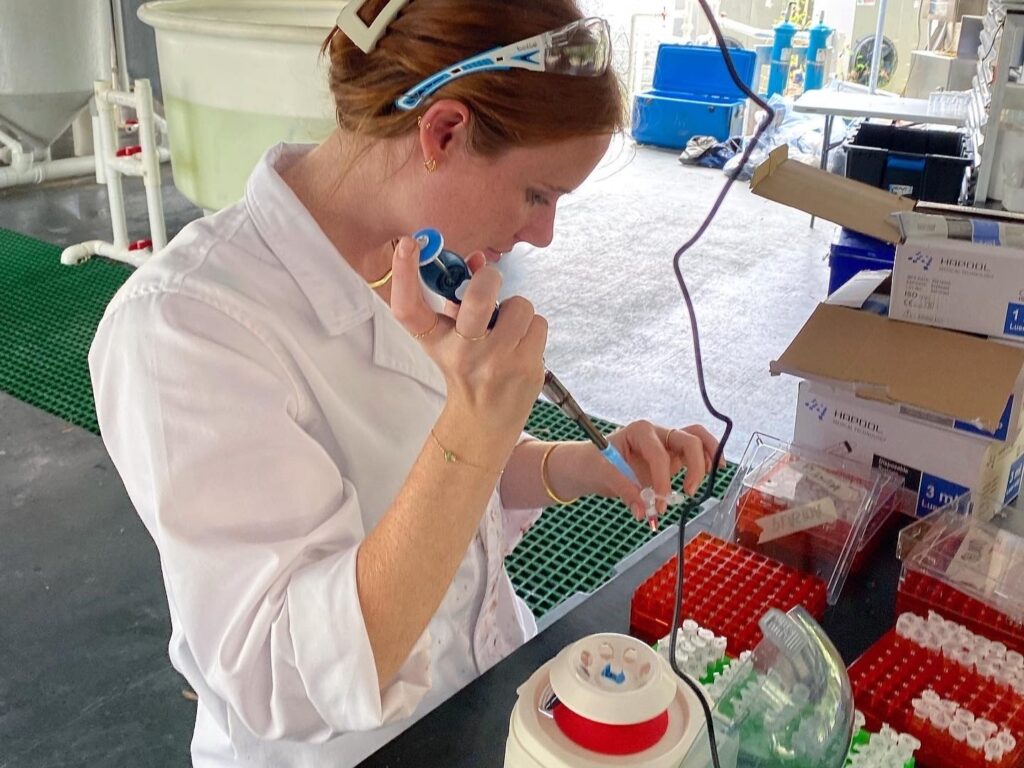
I grew up in Darwin, where I spent most of my childhood fishing, camping, and exploring the outdoors. I have always had a passion for marine biology and all things ocean-related, and in 2022, I decided to pursue this interest by moving to Townsville for university. It was my dad who first suggested incorporating aquaculture as a second major after hearing about the success of Humpty Doo Barra, a local fish farm in Darwin.
Aquaculture quickly became a passion of mine for many reasons. Not only does it help reduce pressure on wild fish stocks, but it also creates unique job opportunities and drives economic growth in regional communities. I’m especially drawn to the practical applications of aquaculture research, where findings can be directly implemented on farms to improve sustainability and efficiency. I have a strong interest in reproductive physiology, as it plays a crucial role in the success of farms and the growth of the industry. Improving fertility rates, egg quality, larval survival, and managing sex change in species like barramundi are all essential for optimising production.
Future Career Goals:
After graduation, I plan to continue working in reproductive physiology, focusing on projects that optimise breeding techniques. In the future, I hope to pursue a PhD, allowing me to lead my own research projects and contribute further to the field.
Background
Barramundi (Lates calcarifer) is a globally important aquaculture species and a major contributor to Australian tropical aquaculture production. Effective broodstock management is essential for reliable larval production, selective breeding programs, and long-term industry sustainability. However, one of the primary challenges in barramundi hatcheries is the accurate identification of sex and reproductive status in broodstock populations.
Barramundi are protandrous hermaphrodites, meaning individuals typically mature first as males and later transition to females. In addition, barramundi lack obvious external sexual dimorphism, making visual identification of sex unreliable. As a result, hatcheries often rely on indirect or invasive approaches to determine reproductive status. The development of tools capable of detecting sex-associated reproductive biomarkers could provide a valuable method for improving broodstock management.
This study investigated the potential of a species-specific reproductive biomarker to support the development of laboratory detection methods for barramundi reproductive monitoring.
Objectives
The project aimed to:
Identification of Reproductive Biomarkers
Bioinformatic analyses were conducted using publicly available barramundi genomic and RNA sequencing datasets. Phylogenetic and transcriptomic analyses identified several candidate genes associated with reproductive physiology.
One biomarker demonstrated strong expression patterns, consistent with its known role in reproductive processes in many teleost fish species. Based on these characteristics, this biomarker was selected as the target for further assay development.
Antibody Development
Initial steps were undertaken to develop species-specific antibodies capable of recognising the selected reproductive biomarker. Laboratory analyses using sodium dodecyl sulfate–polyacrylamide gel electrophoresis (SDS-PAGE), western blotting and liquid chromatography–tandem mass spectrometry (LC-MS/MS) confirmed that the antibody produced in this study recognised the target biomarker.
Preliminary Assay Development
The project also undertook the initial development of an immunoassay designed to detect the reproductive biomarker. Preliminary evaluation using a recombinant reference standard demonstrated measurable signal detection across a defined working range and indicated strong linearity across the standard curve.
However, these assay performance characteristics remain provisional because the assay has not yet undergone full validation. Additional optimisation and validation steps will be required to confirm sensitivity, specificity, and repeatability before routine application.
Detection in Biological Sample Types
A key objective of the study was to evaluate whether reproductive biomarkers could be detected in minimally invasive sample types.
Laboratory analyses confirmed that the biomarker could be detected in blood and plasma samples obtained from female barramundi. In addition, this study provides the first evidence that reproductive biomarkers associated with female maturation can also be detected in the skin mucus of barramundi.
Skin mucus represents a promising sample type because it can be collected rapidly and with minimal stress to the fish. The presence of reproductive biomarkers in mucus therefore suggests the potential for developing non-lethal and minimally invasive monitoring approaches.
Key Research Outcomes
Conclusion
This research represents an important early step toward the development of biomarker-based tools for monitoring reproductive status in barramundi. While further assay optimisation and validation are required, the findings demonstrate the feasibility of detecting reproductive biomarkers in both blood and skin mucus samples. Continued development of these approaches may ultimately support improved broodstock management and reproductive monitoring in the barramundi aquaculture industry.
Executive Summary: Practical Applications for the Barramundi Aquaculture Industry
Background
Barramundi farming is a major component of Australia’s tropical aquaculture sector. However, reliable hatchery production depends on the effective management of broodstock – the adult fish used for breeding. One of the key challenges for hatchery operators is determining the sex and reproductive condition of broodstock fish.
Barramundi do not show clear external differences between males and females. In addition, individuals begin life as males before transitioning to females. This makes it difficult for hatchery staff to identify which fish are ready to reproduce or to maintain balanced breeding populations. Current techniques to identify sex include gonadal cannulation which involves sedating the fish and inserting a thin plastic tube (cannula) into the genital opening to collect sperm or egg samples. Other techniques include collecting blood samples to look at hormone levels. However, both approaches impose safety risks to both the fish and the handler.
Purpose of the Research
This research investigated whether biomarkers could be used to identify the reproductive status and sex of barramundi. The study explored methods for detecting these biomarkers in fish samples and assessed whether they could be measured in the skin mucus to enable non-invasive sampling.
Key Findings
The research identified a reproductive biomarker associated with female reproductive development in barramundi. Laboratory analyses confirmed that the biomarker can be detected in biological samples collected from male and female fish. Importantly, the study also demonstrated that the reproductive biomarker can be detected in the skin mucus of barramundi. Skin mucus forms a protective layer on the surface of the fish and can be collected without harming the animal unlike blood samples or gonadal cannulation. Although additional research is required to fully develop and validate these detection methods, the results demonstrate the feasibility of biomarker-based approaches for monitoring reproductive status in barramundi.
Industry Applications
Biomarker-based tools will allow hatchery operators to determine the reproductive status of fish earlier and more accurately. This will help hatchery managers maintain appropriate male-to-female ratios within broodstock populations and eliminate the need for gonadal cannulation or blood extraction. Better understanding of broodstock reproductive condition will also allow hatcheries to better predict spawning readiness and optimise breeding schedules. This will contribute to more consistent larval production and improved hatchery outcomes. Furthermore, the ability to detect reproductive biomarkers in skin mucus creates the potential for non-lethal and low-stress monitoring techniques. This would reduce handling stress on valuable broodstock and improve animal welfare during routine monitoring.
Future Development
The current research represents an early stage in the development of biomarker-based reproductive monitoring tools for barramundi aquaculture. Further research will focus on refining laboratory detection methods, improving reliability, and validating the approach across larger populations of fish. With continued development, these technologies will provide aquaculture producers with practical tools for improving broodstock management and strengthening the productivity of the barramundi industry.
The barramundi aquaculture industry provides significant economic value to many regional and northern Australian communities through employment, food production, and supply chain activity. Improving the ability to quickly, safely, and accurately identify the sex and reproductive status of broodstock could help hatcheries operate more efficiently and increase production reliability. In turn, this will support the continued growth of the industry, helping to strengthen regional aquaculture operations and contribute to economic development in communities where barramundi farming is an important industry.
Key Take-Home Message for Industry
Reproductive biomarkers show strong potential to support new tools that could help hatcheries identify the reproductive status of barramundi more accurately and with less stress to fish. While further development is required, this research provides an important foundation for future technologies that may improve broodstock management and hatchery efficiency across the barramundi aquaculture sector.